
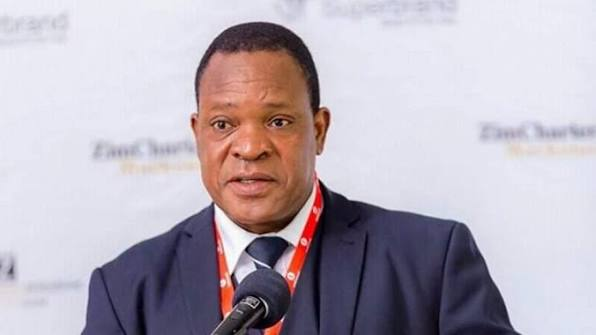
By Thabisani Dube
HARARE — The Government is continuing with its drought mitigatory measures meant to cushion the country from the effects of the 2026/27 El Nino with immediate plans to build a 600 000-tonne Strategic Grain Reserve by the end of October next year by using grain purchases from the current and next winter cropping season.
Zimbabwe expects to produce about 1.6 million tonnes of cereals in the 2026/2027 agricultural season, leaving a deficit of about 663,188 tonnes against national requirements, as the Government moves to strengthen food security amid forecasts of a potentially severe El Niño event.
In a post-Cabinet media briefing, acting Minister of Information, Publicity and Broadcasting Services, Prof Paul Mavhima, said government approved an updated 2026/2027 Summer Plan that incorporates the Drought Plan, presented by the Minister of Agriculture, Mechanisation and Water Resources Development, Dr Anxious Jongwe Masuka.
According to the update, projected cereal production stands at 1 607 198 tonnes against national requirements of 2 270 386 tonnes, highlighting the need for strategic grain reserves and imports to cover the shortfall.
The government identified two major threats to the coming agricultural season: a predicted super El Niño and geopolitical tensions expected to push up fuel and fertiliser prices while disrupting supplies.
The plan builds on lessons from the 2024/2025 agricultural season, when Zimbabwe experienced its worst drought since 1980, and outlines six strategic interventions to strengthen national resilience.
These include strengthening the Strategic Grain Reserve, accelerating climate-smart agricultural production, improving agricultural financing, mitigating livestock drought risks, enhancing imports, and improving coordination, early warning systems, and capacity-building support.
As such, government plans to build a dedicated 600 000-tonne Strategic Grain Reserve by October 2027, using grain purchases from the 2025/2026 summer season and the 2026 and 2027 winter cropping seasons.
The update also highlights progress under the Pfumvudza/Intwasa conservation farming programme, which targets 16 million plots during the 2026/2027 season.
A total of 7 603 250 plots had been established at the time of the update, representing 47.52 percent of the target and covering 475 203 hectares.
Irrigation development is another priority, with more than 112 000 hectares identified for maize production under irrigation.
The Government and private sector, including self-financing farmers, have mobilised funding for the summer agricultural season.
To address potential fertiliser shortages, the update provides for duty-free imports of basal and top-dressing fertilisers, in response to elevated prices and anticipated logistical delays.
Statutory Instrument 214 of 2025 had permitted the importation of 150 000 tonnes of ammonium nitrate and 100,000 tonnes of urea.
Households will also continue benefiting from duty-free imports of basic commodities until March 2028 under Statutory Instrument 59 of 2006, a measure intended to cushion consumers against price shocks.
Livestock production faces significant risks, with an estimated 2 236 203 cattle potentially vulnerable to drought in 2027.
The government is expanding Ward Drought Mitigation Centres, an initiative launched in 2024 that seeks to establish facilities in each of the country’s 1 527 rural wards.
The centres are intended to provide cattle dipping, livestock feeding and marketing services to help farmers protect their herds during periods of drought.
The plan also prioritises small livestock, including goats and poultry, as well as fisheries, to diversify livelihoods and strengthen community resilience.
A whole-of-government and whole-of-society coordination mechanism has been adopted to improve planning, information-sharing and early action among stakeholders.
Government said it would continue providing updates on seasonal weather developments and their implications for agriculture, water, energy, animal diseases, human health, livelihoods and the wider economy.