

Antony Chawagarira
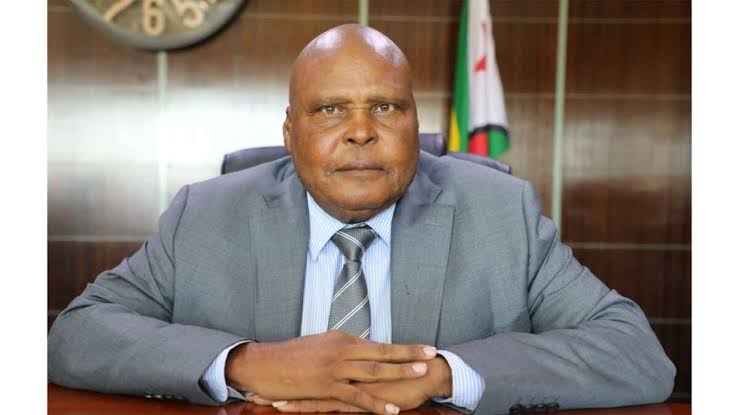
INFORMATION, Publicity and Broadcasting Services Minister Dr Zhemu Soda has challenged New Ziana to abandon its traditional news agency model and embrace digital transformation, multimedia production, and commercially sustainable operations to remain relevant in an increasingly competitive media environment.
The Ministry’s Permanent Secretary, Nick Mangwana, delivered Dr Soda’s address and recently officially opened the three-day New Ziana 2027 Strategic Planning Workshop in Harare.
The workshop, jointly convened by the Zimbabwe Mass Media Trust (ZMMT) and New Ziana, focused on digital transformation, revenue diversification, and alignment with the National Development Strategy 2 (NDS2).
In his address, Dr Soda said that the changing media landscape required a fundamental rethink of the national news agency’s business model, editorial strategy, and revenue-generation mechanisms, warning that continued reliance on traditional news distribution systems would undermine its future.
“We are not here to review activities or produce another strategic document. We are here to determine how this national institution must reposition itself to serve Zimbabwe in a rapidly changing communications environment,” he said.
Dr Soda said the traditional news wire model, which relied on selling packaged news to subscribing media organisations, had become unsustainable as information became readily available across multiple digital platforms.
“The traditional news wire model — receiving information, packaging it and selling it to subscribing newsrooms — is no longer viable. News is now readily available for free, across multiple platforms, in real time. New Ziana cannot build its future around being a gatekeeper or around selling news to other news organisations. That market has collapsed,” he said.
He challenged management to develop a completely revised Information Strategy that would redefine the organisation’s purpose, products, and revenue streams in response to technological disruptions and changing audience preferences.
The Minister called for digital publishing to become the organising principle of the newsroom, with journalists in the provinces expected to file timely reports from the communities they serve. However, he cautioned that the pursuit of breaking news should not compromise accuracy and public trust.
“Real time must never mean recklessness. Speed without accuracy will destroy the very asset on which a news agency depends — public trust,” he said.
Dr Soda said New Ziana should also deliberately invest in audio-visual journalism through podcasts, short videos, interviews, and explainers, particularly targeting younger audiences with relevant content on agriculture, science and technology, entrepreneurship, and education.
He said the transformation should extend to the organisation’s eight provincial newspapers, which he described as strategic assets capable of advancing the Government’s devolution and decentralisation agenda by giving rural communities a stronger voice.
However, he expressed concern over the current operating model, questioning whether the State was getting value for money from the publications.
“It is a challenge to justify whether the State is getting value for money from this enterprise, whose main activity is often only seen in WhatsApp groups. This must change,” he said.
Dr Soda directed that the provincial newspapers should increasingly publish in the vernacular languages spoken in their respective areas of circulation, arguing that local-language journalism should become the foundation of their editorial mission rather than an occasional addition.
He also called for improved printing and distribution systems to ensure that communities without internet access continue receiving information through physical newspapers.
The Minister said the publications should reduce their dependence on Treasury funding by developing viable advertising models that would attract local businesses, national brands, Government departments, and development partners.
“Publication and distribution costs must be recouped from advertising, not from the fiscus. We cannot continue to rely on Treasury for a product with a ready market for advertisers who want to reach rural communities,” he said.
He said the provincial newspapers should become platforms through which communities could communicate their development concerns and aspirations while holding service providers and decision-makers accountable.
Dr Soda challenged journalists to move beyond reporting Government announcements and project commissioning ceremonies and instead investigate how development initiatives were changing people’s lives.
“What has changed? Who has benefited? Who is still waiting? What obstacles remain?” he asked.
He said the publications should highlight the experiences of farmers seeking markets, young people pursuing opportunities, families requiring better water supplies, and entrepreneurs building businesses, ensuring that rural development is reported with dignity and balance.
The Minister further called for closer collaboration between New Ziana and the Ministry’s Rural Communication Unit, which has a presence in every district across the country, saying the network offered an opportunity to strengthen community news gathering and distribution.
He said the collaboration would ensure that provincial newspapers and digital platforms were connected to developments taking place at grassroots level, in line with NDS2, which covers the 2026-2030 period, and the country’s Vision 2030 aspirations.
Dr Soda said the Zimbabwe Mass Media Trust should provide strategic direction and effective oversight, while management should take responsibility for implementation, performance, and financial accountability.
He urged the organisation to invest in appropriate technology, equipment, staff training, and editorial leadership, while strengthening partnerships with provincial administrations, educational institutions, community organisations, and businesses.
The strategic planning workshop is expected to produce a revised Information Strategy, a digital-first editorial framework, a multimedia production programme, a community-service mandate for provincial newspapers, and a costed implementation plan outlining staffing, training, equipment, financing, revenue projections, and measurable outcomes.
Dr Soda said the success of the transformation should be measured by its impact on communities and not merely the number of stories published, meetings covered or videos uploaded.
“Measure success by whether a rural farmer can access a market through an advertisement in a vernacular newspaper, whether a young person can pursue an opportunity from a podcast, whether a community’s concerns reach decision-makers, and whether the provincial newspapers generate enough revenue to cover their costs,” he said.
He said New Ziana’s history provided a foundation for its future but should not become an excuse for resisting change, urging the institution to retain its public-service mandate while modernising its operations.
“Let us build a New Ziana that is national in reach, local in understanding, modern in its methods and credible in its journalism. Above all, let its work make a meaningful difference in people’s lives,” he said.