
By Sharon Tawuya
Harare, (New Ziana) – The Ministry of Information, Publicity and Broadcasting Services on Tuesday said its 2027 budget allocation of ZWG580.621 million will only meet 51 percent of its funding needs, and the shortfall threatened government communication, especially rural coverage, and its fight against misinformation.
It had bid for ZWG1.144 billion in financing for the year, but has been left with a huge funding gap of ZWG563.170 million.
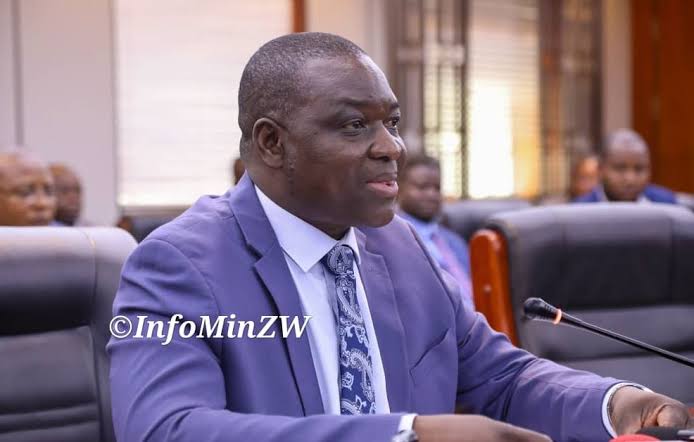
Appearing before the Parliamentary Portfolio Committee on Media, Information and Broadcasting Services on the budget, acting permanent secretary Jonathan Gandari said the amount was grossly insufficient for the Ministry’s mandate as the Government’s principal communication arm.
“Information is a public good and a fundamental pillar of national development. Government messaging is not a mere administrative cost centre; it is a strategic economic asset,” Gandari told the Committee.
He said the Ministry is the third least-supported Ministry in the 2027 budget, despite carrying the weighty responsibility of disseminating Government information nationwide and supporting visibility across all sectors.
Under Programme 1, Policy and Administration, the Ministry bid for ZWG404.7 million but was allocated ZWG210.0 million, leaving a gap of ZWG194.7 million. Under Programme 2, Information and Publicity, the Ministry bid for ZWG739.1 million but was allocated ZWG370.6 million, leaving a gap of ZWG368.5 million.
The core of Gandari’s presentation was that under-funding proactive communication forces the country to pay a heavy “Misinformation Tax.
When timely authoritative official communication is absent, he said, rumours fill the void, triggering market panics, currency instability and public resistance to critical reforms. “Spending on reactive crisis management after a problem erupts costs the fiscus exponentially more than funding proactive campaigns,” he added.
Proper funding, he argued, yields direct fiscal returns in three areas – domestic revenue collection and policy compliance, clear nationwide campaigns increase tax compliance, accelerate informal sector formalisation and reduce friction during fiscal reforms.
He said in public health and disaster mitigation, timely information during disease outbreaks or climate emergencies acts as a first line of defence, saving billions in emergency response costs. In national brand and foreign direct investment, proactive, transparent broadcasting projects stability, lowers Zimbabwe’s perceived risk profile, enhances investor confidence and helps reduce sovereign borrowing costs.
Beyond the gap, the Ministry flagged inherited debts already consuming the 2027 allocation.
Gandari said outstanding obligations from 2024 and 2025 remain unresolved, and outstanding 2026 pay-runs currently exceed ZWG61 million.
The Ministry’s finance director, Phillip Hamadziripi told the Committee the 2025/26 debt is now the elephant in the room.
“The 2025/26 debt is detrimental … because service providers are now reluctant to give services.”
Gandari warned this creates a rolling debt burden where past obligations absorb resources intended for current programmes, forcing the Ministry to carry indebtedness into future financial years.
Hamadziripi told the Committee that New Ziana, an agency under the Ministry, got a budget allocation of ZWG10.24 million out of its ZWG19.6 million bid, leaving a gap of ZWG11 million.|
“If we could get (Zig) 4 million, they could be able to do something.”
Only 45 percent of New Ziana’s funding needs were catered for by Treasury in the budget.
Speaking for the agency, Ray Mungoshi, executive secretary of the Zimbabwe Mass Media Trust (ZMMT), told the Committee that New Ziana had severe financial limitations, and required assistance from Treasury to sustain its news gathering and production operations, let alone to expand these.
Among other things, the agency wanted to broaden its digital footprint, and resume printing of its provincial newspapers next year, he said.
In this regard, Mungoshi said New Ziana intends to upgrade its website, social media channels and other digital distribution platforms.
It also intends to strengthen its capacity to produce video content, podcasts, interviews, documentaries and other multimedia products that can attract both audiences and advertisers.
He said the agency alone required ZIG7.5 million to resume printing newspapers, which was important for marginalised communities with limited access to digital platforms.
Tichafa Tongogara, a representative of the Zimbabwe Film and Television School of Southern Africa, said the government media training school was operating with outdated equipment that needed to be upgraded to meet current standards.
“I implore you to look at this critically.” Tongogara said without urgent recapitalisation, the school cannot train journalists and media practitioners to the standard required for digital broadcasting, content production and the Zim-Digital transition,”he said.
Gandari appealed for an upward review of the Ministry’s allocation to at least 70 to 75 percent of its bid.
He said this would enable it to close critical funding gaps, reduce pressure from inherited obligations, strengthen nationwide communication infrastructure, and support community and campus broadcasting platforms.
He said it would also go some way to enhance Government visibility and citizen engagement, improve dissemination of Government programmes and achievements as well as strengthening implementation of national development priorities.
In his written submission, Gandari put the ideal revised figure at ZWG790,897,623, exclusive of employment costs, and said securing that minimum fiscal space is essential to execute four strategic pillars: rural and marginalised inclusion and completion of Zim-Digital, Government communication and citizen engagement, national image building and countering misinformation, and media oversight and corporate governance.
He benchmarked Zimbabwe against SADC and global peers, arguing governments are now treating public media as critical sovereign infrastructure, not as an administrative expense.
“A nation that underfunds its information ecosystem surrenders its narrative to external actors and leaves its rural citizens in the dark,” Gandari said. “Zimbabwe cannot achieve Vision 2030 or effectively implement NDS2 on a 51 percent budget.”
Gandari said an upward review to ZWG790,897,623 is an investment that will pay for itself by eliminating the Misinformation Tax, safeguarding communication infrastructure, improving regulatory compliance and fostering an informed, engaged and inclusive citizenry.
“Effective Government communication is a strategic investment in transparency, accountability, public participation, and national development. We therefore respectfully implore the Committee to support the Ministry in securing maximum possible funding support to enable it to effectively communicate Government programmes, strengthen national visibility, and ensure that no citizen and no place is left behind.”
New Ziana