
By Cynthia Pelagia Guma
Harare, (New Ziana) -The Zimbabwe government has launched a national Labour Market Information System (ZLMIS), a digital platform expected to improve employment planning, identify skills gaps and strengthen decision-making through reliable data.
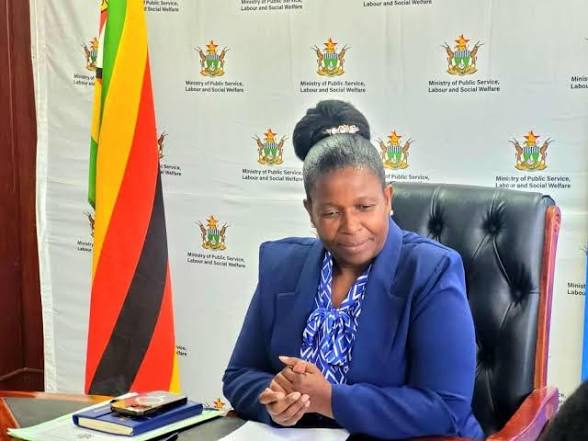
Speaking at the launch on Wednesday, Deputy Minister of Public Service, Labour and Social Welfare Mercy Dinha said the system would provide a centralised platform for collecting, managing and sharing information on employment trends, unemployment, earnings, labour productivity and skills requirements.
She said reliable labour market information was critical to addressing employment challenges and ensuring that government interventions responded to the country’s economic realities.
“Employment is central to economic development, poverty reduction, social protection and the improvement of livelihoods. However, the effectiveness of our interventions depends to a considerable extent on the availability of timely, accurate and reliable labour market information,” she said.
Dinha described the launch as a significant milestone in strengthening Zimbabwe’s labour market governance, particularly as the country pursues economic transformation, employment creation and skills development.
The system is expected to consolidate information from different institutions onto one platform, addressing challenges associated with fragmented labour market data and making information more accessible to policymakers, researchers, employers, workers and job seekers.
She said the platform would also assist the government identify sectors with employment potential, track changing labour demands and improve the transition of graduates and other job seekers from education and training into the workplace.
Dinha noted that the initiative came at an important stage as Zimbabwe implements its National Development Strategy 2 (NDS2), covering the period 2026-2030, which prioritises inclusive economic growth, employment creation, human capital development and social protection.
The system is also expected to contribute towards monitoring progress on the Sustainable Development Goals, particularly those relating to decent work and economic growth, poverty reduction and gender equality.
Dinha further highlighted the platform’s potential to identify inequalities in employment opportunities, skills mismatches and challenges affecting vulnerable groups, including young people, women and persons with disabilities.
She however, emphasised that the effectiveness of the system would depend on the quality, consistency and regular updating of information supplied by participating institutions.
“I call upon all relevant institutions to regard the provision of labour market information not merely as an administrative responsibility, but as a contribution to our country’s broader development objectives,” she said.
Dinha acknowledged the technical support provided by the International Labour Organisation (ILO), as well as the contribution of the Ministry of Information Communication Technology, Postal and Courier Services in deploying the platform and its supporting infrastructure.
She said the success of the initiative should not simply be measured by the availability of information online, but by its impact on policy formulation, employment programs and opportunities for decent work.
“The success of the labour market information system should not be measured solely by the availability of data online but by its contribution to better policies, more effective programmes, improved labour market outcomes and expanded opportunities for decent work,” she said.
New Ziana