
By Johnson Siamachira
Harare, (New Ziana)- For generations, families of migrant origin have worked Zimbabwe’s farms, helping produce the crops that sustain households and the wider economy. Yet some of their descendants, born and raised in the country, still struggle to obtain identity documents, secure decent employment and access essential services. For those who lack documentation, the struggle for a livelihood can become a struggle to be recognised as citizens in the only home they have ever known.
The predicament exposes a troubling human rights question: how can Zimbabwe protect the dignity and labour rights of farm workers when some cannot establish their legal identity, while others fear that challenging an employer could cost them their jobs, accommodation or security?
The problem extends beyond immigration. It involves the right to fair working conditions, equality before the law, education, health care and access to justice. Although international human rights bodies have documented particular vulnerabilities among migrant farm workers and their descendants, Zimbabwe lacks comprehensive, up-to-date data showing the national scale of the violations.
A legacy that crosses generations
The roots of the problem reach back to colonial rule, when labour recruiters brought thousands of workers from neighbouring Malawi, Mozambique and Zambia to work on farms and mines in what was then Rhodesia.
Godfrey Magaramombe, executive director of the Farm Community Trust of Zimbabwe says: ‘’Many settled permanently, raised families and established communities’’, adding: ‘’Their children and grandchildren grew up in Zimbabwe, often maintaining few connections with their ancestors’ countries of origin.’’
Magaramombe adds: ‘’Independence in 1980 did not automatically resolve questions of nationality for everyone of foreign descent. Subsequent citizenship laws and administrative requirements created obstacles for some families seeking birth certificates, national identity documents and proof of citizenship.’’
In a 2021 report, We are like “stray animals”, Amnesty International documented how descendants of migrant workers faced exclusion because of discriminatory nationality laws and bureaucratic barriers. The organisation cited an estimate from the United Nations refugee agency that about 300,000 people in Zimbabwe were at risk of statelessness. The figure was not a confirmed count, and the absence of comprehensive data meant the actual number remained uncertain.
A tractor is seen transporting farm workers property on the highway on the outskirts of Bulawayo, Zimbabwe Photo: Tsvangirayi Mukwazhi/AP Photo.
The consequences can pass from parents to children. When adults cannot obtain identity documents, they may struggle to register their children’s births, leaving another generation facing the same barriers.
For a child, the absence of a birth certificate can mean difficulty enrolling in school, sitting examinations or obtaining other documents needed later in life. For an adult, it can complicate access to formal employment, health care and social protection.
Alex Phiri, whose father was Zambian, said: “I have no idea how I can locate my parents’ relatives as I have never been to Zambia.”
Phiri does not have death certificates for either his father or his Zimbabwean mother. As a result, he has been denied citizenship, which prevented him from going beyond Grade 7 at school and means neither of his children have birth certificates
Amnesty International documented the experience of a woman from Tsholotsho.
Botshiwe Dube told Amnesty International how she went to a health centre when she went into labour, but when she could not provide ID she was sent home to deliver her children.
All of Botshiwe’s children were born at home; she told Amnesty International that she feels they are treated like “stray animals because they are undocumented.”
Her account illustrates how an administrative requirement can have consequences far beyond a government registry office. Without documentation, people can encounter barriers at precisely the moments when they most need public services.
These experiences also raise questions about the implementation of Zimbabwe’s Constitution, which provides for citizenship by birth in specified circumstances and protects children’s rights, including the right to a name and prompt birth registration.
“For Zimbabwe’s stateless, everyday life is filled with obstacles. Accessing education, healthcare and employment can be a nightmare, and the sense of exclusion and rejection is soul destroying,” said Amnesty International in a report, adding: “The Zimbabwean authorities must take concrete action to address this crisis, including mapping and registering all stateless people. Authorities must ensure laws are in line with Zimbabwe’s own Constitution, as well as international human rights law.”
Without the necessary identity documents, many stateless children are unable to access education. Those who do attend school are often forced to drop out, or prevented from sitting their final exams. Lulumani Nkomo, a 23-year-old woman from Lupane district in Matabeleland North Province, said: “Life has been difficult and painful. I was brilliant at school, but I did not sit my final exams. Now I can’t get a decent job.”
The price of speaking out
For migrant farm workers, insecure documentation can compound the vulnerabilities associated with low-paid agricultural employment.
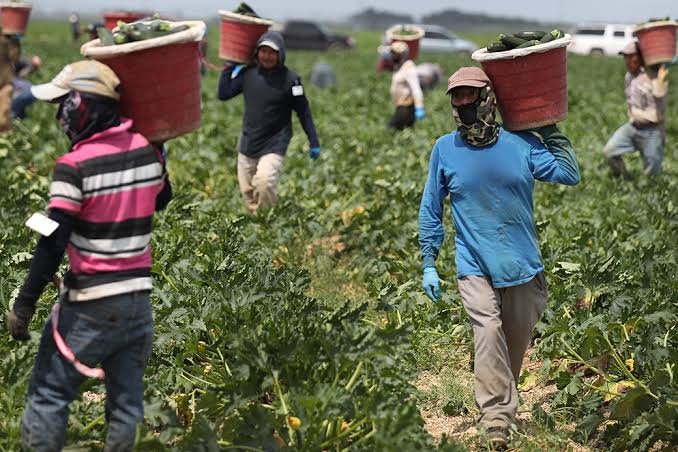
Zimbabwe’s farming sector has long relied on workers who perform physically demanding tasks, often in remote locations where alternative employment and support services are limited. Workers who depend on a farm for both income and accommodation may find it difficult to challenge an employer over wages, working hours or unsafe conditions.
In a 2023 report, Al Jazeera described the working conditions of agricultural labourers in Zimbabwe, including long shifts, low wages, inadequate accommodation and limited employment benefits. One worker, Admire Munatsi, told the news organisation that he had spent years working without a written contract, pension contributions, leave days or medical insurance.
Munatsi’s account concerned farm labour conditions generally; it does not establish that he was a migrant worker or lacked citizenship documents. Nevertheless, it illustrates the wider employment vulnerabilities that can become more difficult to challenge when workers have little bargaining power.
For workers with insecure immigration status or unresolved citizenship claims, the risks may be greater. Losing a job can also mean losing a place to live, while fear of retaliation may discourage complaints to labour authorities or the police.
The United Nations Committee on the Elimination of Racial Discrimination has raised concerns about migrant farm workers’ access to economic and social rights in Zimbabwe. It has also highlighted discrimination and sexual violence affecting undocumented migrant women and girls.
Women working in isolated farming communities may face additional risks when they depend on employers or other powerful individuals for employment, accommodation or access to services. But the extent of such abuses across Zimbabwe’s farms cannot be established from the available evidence alone.
The distinction matters. Human rights reporting must document individual allegations, seek corroboration and give those accused of wrongdoing an opportunity to respond, rather than assume that all employers exploit migrant workers or that every foreign-origin worker is undocumented.
The land reform turning point
Zimbabwe’s fast-track land reform programme, launched in 2000, added another dimension to the vulnerability of farm workers. The programme sought to correct colonial-era inequalities in land ownership, but the restructuring of commercial agriculture also displaced many workers whose livelihoods and homes depended on the farms.
Research on former farm workers has estimated that 350,000 to 400,000 people lost their livelihoods or were displaced during the land reform process. These figures concern former farm workers generally, not exclusively migrants or people at risk of statelessness.
Some workers of foreign origin faced additional obstacles because they lacked documents needed to establish citizenship or qualify for land allocations. For families who had lived in Zimbabwe for decades, the loss of farm employment could therefore mean more than losing a wage. It could also mean losing their homes, access to services and the community networks on which they depended.
A September 2026 study of former farm workers in Mazowe District in Mashonaland Central Province found that many continued to face precarious living conditions years after displacement, relying on informal activities such as petty trading, piecework and artisanal gold mining. The research illustrates how the consequences of losing agricultural employment can persist long after workers leave the farms.
The experiences of displaced workers and those still employed on farms are not identical. But both raise questions about whether agricultural policies and labour protections adequately account for the welfare of people whose livelihoods depend on the sector.
Rights recognised, protection uneven
Zimbabwe’s Constitution provides important safeguards. Section 51 protects human dignity, section 56 guarantees equality before the law and protection against unfair discrimination, and section 65 provides for fair and safe labour practices, fair wages and satisfactory working conditions.
These protections matter to migrant workers as well as citizens. A person’s nationality or immigration status does not make abuse, forced labour or degrading treatment acceptable.
Zimbabwe also acceded to the International Convention on the Protection of the Rights of All Migrant Workers and Members of Their Families in November 2024. The convention entered into force for the country on March 1, 2025, strengthening its
The challenge is translating legal commitments into practical protection. Workers need accessible labour inspections, affordable legal assistance, effective complaint mechanisms and protection against retaliation. People struggling to establish their nationality also need fair, accessible procedures for obtaining civil documents.
The National Labour Migration Policy for Zimbabwe provides a framework for improving migration governance, but policy commitments alone cannot establish whether workers on individual farms receive their entitlements. That requires current evidence from workers, employers, labour inspectors, unions and relevant government departments.
Breaking the cycle
For a child growing up on a farm, a birth certificate can determine whether school examinations, further education and formal employment remain within reach. For a parent, a written employment contract and reliable wages can determine whether a family can afford food, medical care and a secure home.
These are not separate problems. When a worker lacks documentation, has little bargaining power and depends on an employer for accommodation, several vulnerabilities can reinforce one another.
Authorities must distinguish between recently arrived foreign workers, people with irregular immigration status and Zimbabwean-born descendants of migrants who may be entitled to citizenship under the Constitution. Each group has different
Civil registration programmes should reach remote farming communities and help eligible people obtain birth certificates and identity documents without unnecessary administrative barriers. Labour authorities should investigate complaints about unpaid wages, unsafe conditions and exploitation, while ensuring workers can report abuse without fear.
Employers, meanwhile, should provide clear employment terms, pay lawful wages, maintain safe workplaces and respect workers’ rights regardless of nationality. Trade unions and civil society organisations can help workers understand their entitlements and access remedies.
Crucially, Zimbabwe needs reliable data on migrant workers’ employment conditions, documentation status and access to essential services. Without it, authorities cannot accurately measure the scale of the problem or determine whether existing interventions are working.
The evidence available establishes a serious human rights concern, but it does not show how frequently each form of abuse occurs nationwide. That gap should prompt better investigation and monitoring, rather than assumptions about every farm or every migrant worker.
For families whose roots in Zimbabwe stretch back generations, the question is especially fundamental: can they live, work, raise children and access public services without being trapped by the circumstances of their ancestry?
Protecting farm workers’ rights is not simply a question of enforcing employment rules or controlling migration. It is a test of whether Zimbabwe can uphold human dignity in practice — including for people whose labour has contributed to its agricultural economy, but whose own security and belonging remain uncertain.
‘’I feel like I am half human as I don’t benefit from national programmes,’’ bemoans Phiri.