

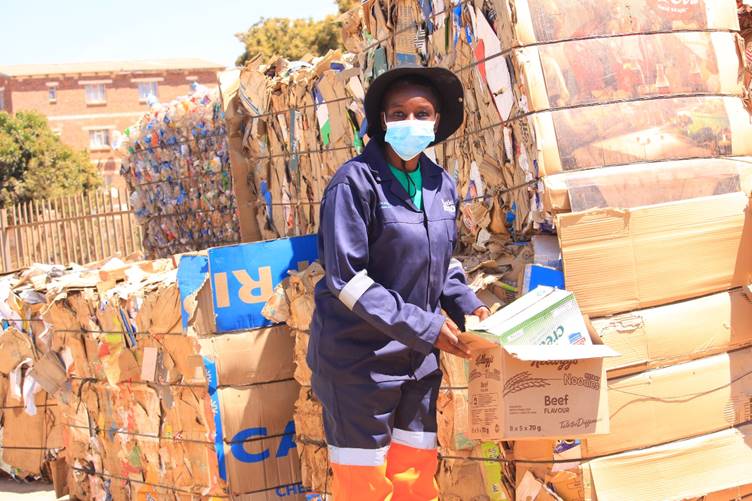
By Johnson Siamachira
Harare, (New Ziana) — In Mabvuku and Tafara high density suburbs in Harare, what many residents once regarded as rubbish is beginning to look like something else: an income.
Every day, waste collectors and residents bring discarded plastics, cardboard and other recyclable materials to the Mabvuku and Tafara community Integrated Resource Recovery Centre, where they are sorted, aggregated and sold. Above the activity, solar panels provide clean energy to power the recycling facility.
The transformation is simple but significant. Waste becomes a commodity, sunlight becomes energy and skills become livelihoods. Rapid urban growth in areas such as Epworth, Mabvuku and Tafara, has left many families without basic services.
More than 400 people from these Harare Metropolitan suburbs have benefited from the Harare Sustainable Cities Initiative(HSCI) that has created green businesses and entrepreneurial opportunities, according to Practical Action, an international non-governmental organisation focused on development through the use of technology to transform lives. Some of the waste pickers claim to earn as much as US$150 to US$250 a month. The programme targets unemployed women, young people and people with disabilities while offering residents life skills that can generate income beyond waste collection.
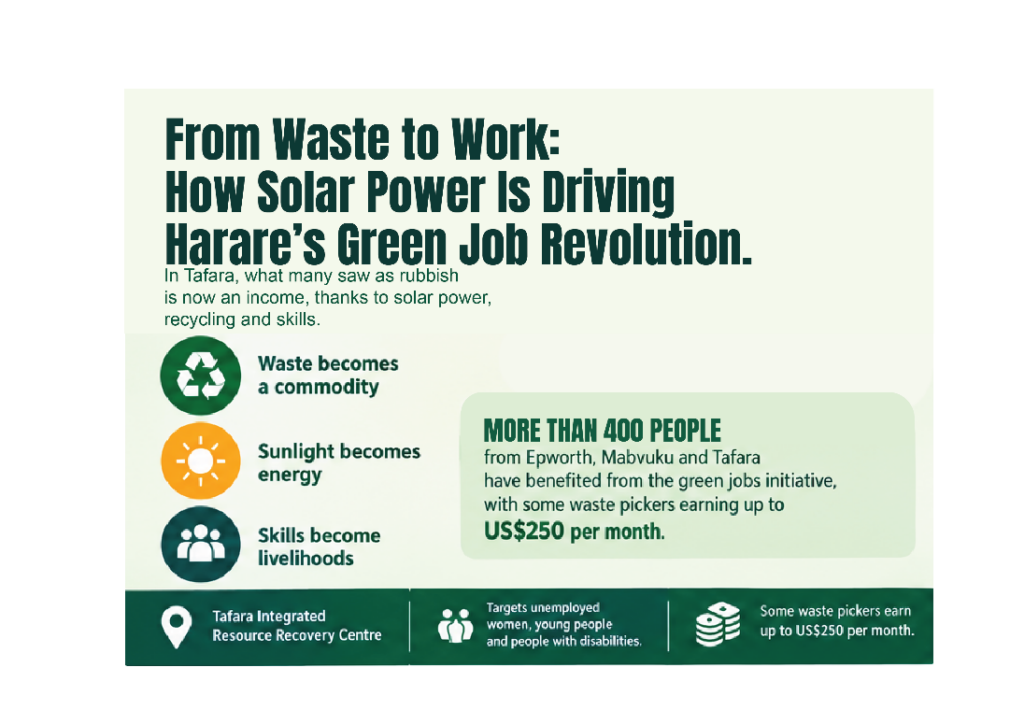
From waste to work. The Harare Sustainable Cities Initiative is creating ‘’green’’ jobs. Infographic by journalist Johnson Siamachira. Source: Practical Action Zimbabwe.
The HSCI project, financed by the Government of Sweden, is coordinated by UN Habitat and implemented by Practical Action.
The initiative offers a glimpse of how Zimbabwe’s urban communities can connect the waste, clean energy, and entrepreneurial skills development into an economic model that keeps materials in use for as long as possible rather than treating them as disposable.
“We operate under the mantra ‘turning waste into wealth’ where waste can be transformed into higher value products that generate income” Samhutsa said, adding that the HSCI project aims to expand participation to include as many as 1000 waste pickers around the Harare Metropolitan Province.
The numbers tell only part of the story.
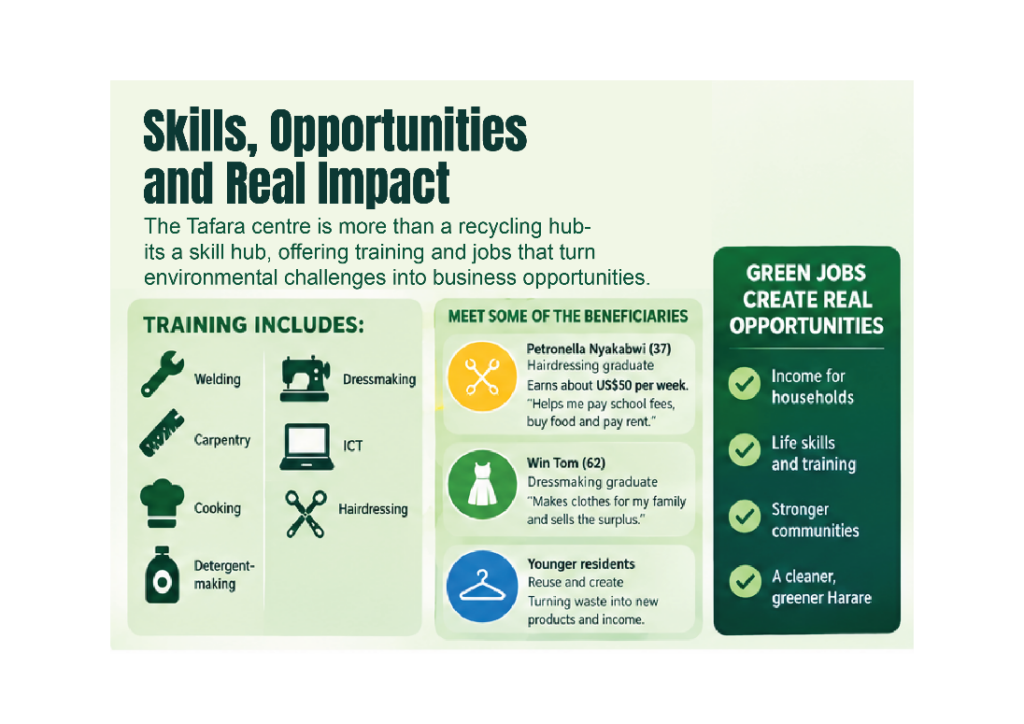
At the Tafara centre, the solar-powered facility has also become a community skills hub. Residents receive training in welding, carpentry, cooking, detergent-making, dressmaking, information and communication technology, and hairdressing. The Mabvuku and Tafara Intergrated Resources Recovery Centre currently employs 29 people full time, while waste collectors form a wider network linked to recycling markets.
The Tafara Integrated Resources Recovery Centre is more than just a skills transfer centre, it has become a sustainable community skills hub. Infographic by journalist Johnson Siamachira. Source: Practical Action Zimbabwe.
For people struggling to find formal employment, those skills can turn an environmental challenge into a small business opportunity.
Thirty-seven-year-old Petronella Nyakabwi, for example, has trained in hairdressing and says she now earns about US$50 a week at the Tafara recycling centre, using the income to help pay household expenses.
“This is important for us,” she said, explaining that the money helps her pay school fees, buy food and pay rent.
Win Tom (62), of Old Tafara, has learnt dressmaking. She said the training allows her to make clothes for her family and sell the surplus. She also says she earns around US$300 monthly.
“I am very grateful for this initiative,” Tom said.
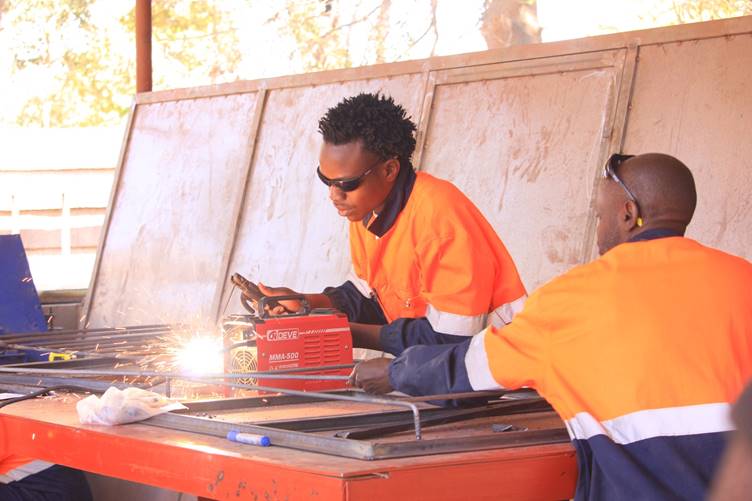
Welding life skills at the Tafara centre. Photo: Johnson Siamachira/New Zian
Forty-year old Shingirai Samson of Old Tafara, says the initiative has helped her recover from drug and substance abuse. ‘’I’m no longer idle since I spend most of my time busy at the centre, ‘’ she says, adding: “We still don’t have machines to make granules so that the waste is sold at a higher value. We still sell the items as bailed waste. Though the money is not much, it is better than staying at home.”
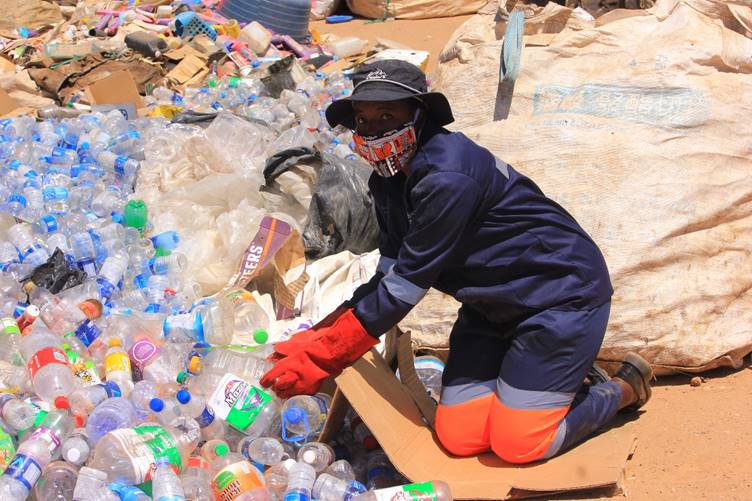
Shingirai Samson sorting out waste at Tafara centre. Photo: Johnson Siamachira/New Ziana.
For younger residents, the centre is also becoming a place to experiment with reuse.
Tatenda Chikokoro, a 25-year-old environmental science graduate, helps run a sewing initiative that converts discarded jeans into reusable shopping bags. Residents can exchange three pairs of old jeans for a reusable bag, linking waste reduction with a modest local enterprise.
That is the circular economy in practical terms: an old pair of jeans does not necessarily have to become rubbish. It can become another product — and another source of income.
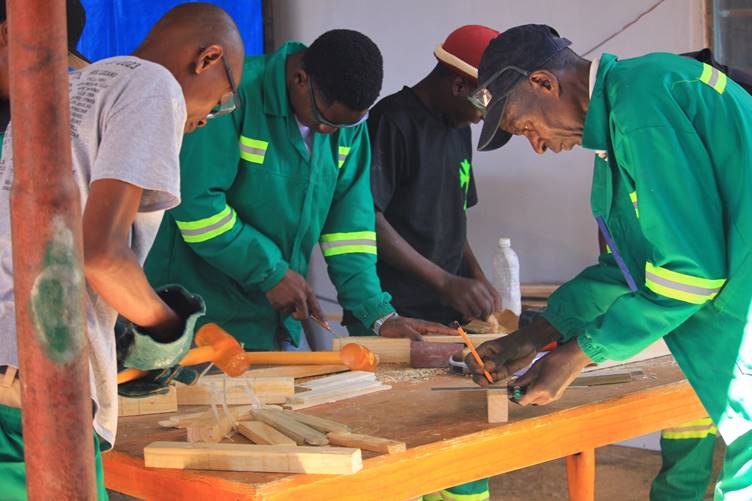
Training in carpentry work. Photo: Johnson Siamachira/New Ziana
Practical Action Zimbabwe Head of Programmes, Henry Muchedzi sees the wider initiative as part of a shift in how urban development is approached. ‘’Big change starts small.’’
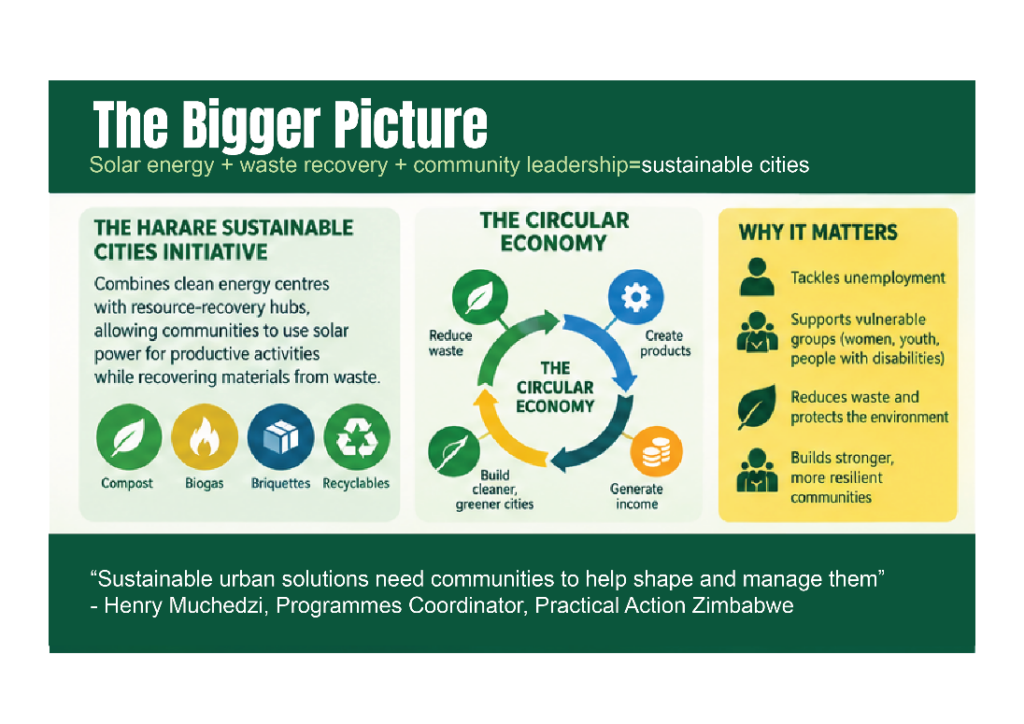
Big change starts small: The Harare Sustainable Cities Initiative. Infographic by Johnson Siamachira: Source: Practical Action Zimbabwe.
The Harare Sustainable Cities Initiative is designed to combine clean energy centres with resource-recovery hubs, allowing communities to use solar power for productive activities while recovering materials from waste. The HSCI Project has resulted in products such as biogas, and recyclables emerging from waste streams.
Zimbabwe enjoys 3,000 hours of sunshine per year. Coupled with more than 80 per cent mobile penetration rate, high use of mobile payment platforms and a highly literate population, a huge opportunity for solar products sales presents itself. The solar water heating programme,for example, has a potential of saving 300MW from retrofitting existing electric geysers.
Muchedzi has stressed the importance of inclusion and local leadership, arguing that sustainable urban solutions need communities to help shape and manage them. At a project validation workshop recently, he said collaboration among communities, government, local authorities, technical experts and development partners would be critical to building sustainable urban models.
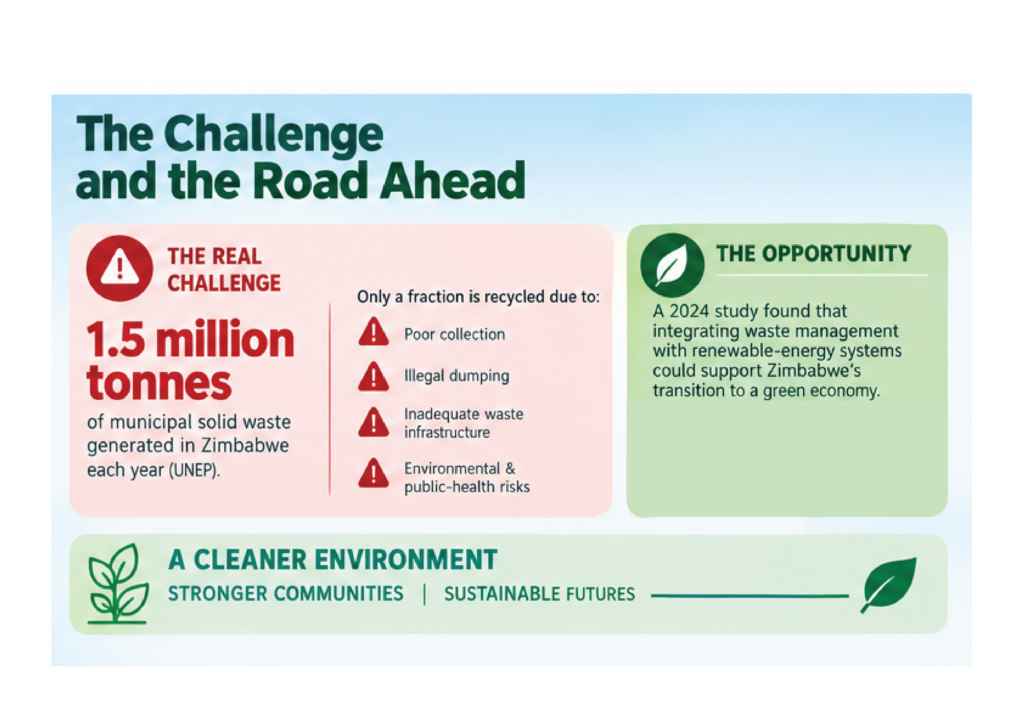
Zimbabwe faces a formidable waste-management challenge. The United Nations Environment Programme(UNEP) has estimated that the country generates about 1.5 million tonnes of municipal solid waste annually, with only a fraction recycled. Poor collection, illegal dumping and inadequate waste infrastructure have contributed to environmental and public-health risks.
Above: Zimbabwe’s solid waste management challenge. Source: United Nations Environment Programme(UNEP).
Research on Zimbabwe’s waste sector also points to opportunities to recover both materials and energy. A University of Zimbabwe 2024 study found that integrating waste management with renewable-energy systems could support the country’s transition towards a circular economy, while reducing pollution and extracting greater value from waste.
The HSCI Project plans to introduce waste value addition so that waste materials can be processed closer to where they are recovered. That could allow participants to capture more of the value currently generated further along the recycling chain.
Transport remains another hurdle. Practical Action says private-sector assistance, including a truck supplied by Delta Corporation for weekly collections, has helped move materials from collection points to the Mabvuku and Tafara Integrated Resources Recovery Centre.
The renewable-energy component matters because reliable and clean electricity can make these enterprises more productive while reducing dependence on conventional energy sources. Zimbabwe’s national renewable-energy policy identifies solar and other off-grid technologies as important tools for expanding access to clean energy and supporting businesses and essential services.
The larger lesson emerging from the Mabvuku and Tafara Integrated Resources Recovery Centre is therefore not simply about recycling.
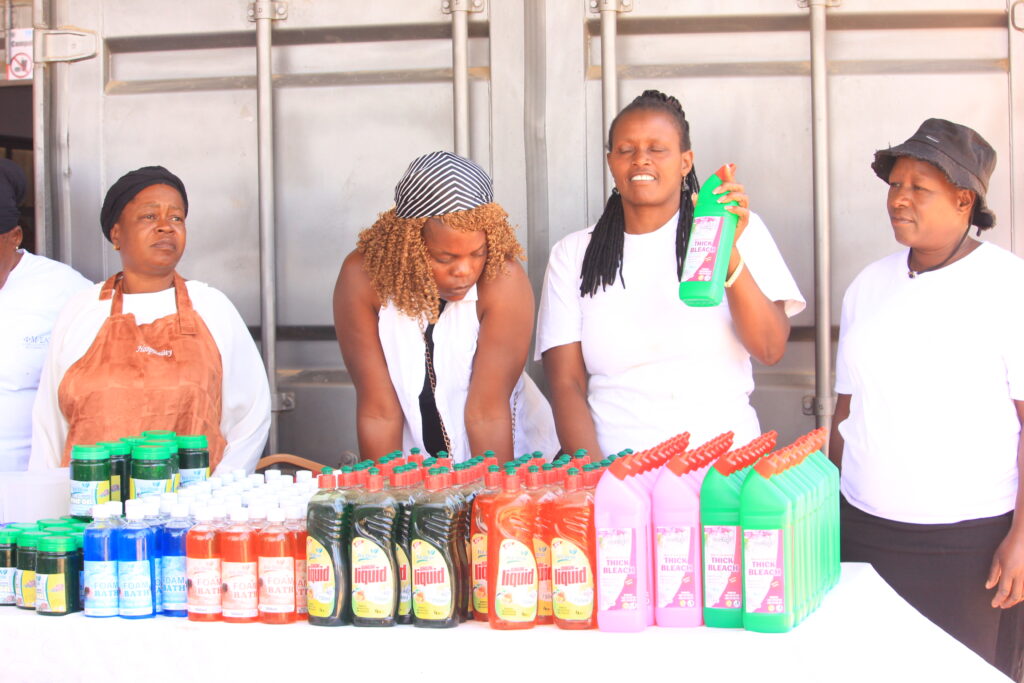
Women learning detergent making at Tafara Centre. Photo: Johnson Siamachira/New Ziana.
It is about redesigning the relationship between clean energy, waste and work.
A plastic pet and bottle can become a raw material. A discarded garment can become a shopping bag. Sunlight can power a workshop. And, a person searching for work can become part of a local value chain.
For Samhutsa, that is the promise of linking clean energy, livelihoods and circular-economy approaches.
Investing in renewable energy technologies is a promising option for combining the multiple goals of climate change mitigation, a low-carbon economy, employment creation (especially among the youth, thereby taking advantage of the growing number of young people out of work), energy security and sustainable development, according to Harnessing Zimbabwe’s Potential for Green Energy and Green Jobs in the Energy Sector, a research study report by the Friedrich Ebert Stiftung.
Green investments are also an important component for supporting entrepreneurial initiatives, skills development and technology transfer, all of which are critical to economic growth and development, the report adds.
In Mabvuku and Tafara, the idea is no longer theoretical. It is taking shape one collected bottle, one solar-powered workshop and one new skill at a time.
‘’As the community of Mabvuku and Tafara, we’re determined that through hard work and careful planning, waste can indeed become a local solution to unemployment, health and environmental challenges overall,’’ said Tom.