

Harare, (New Ziana) – Japan has committed approximately US$98,244 towards the construction of classroom blocks, an ablution block and teachers’ accommodation at Tanaka Primary School in Mbire District, Mashonaland Central Province, in a move expected to improve access to education for children in the area.
The funding, provided under Japan’s Grant Assistance for Grassroots Human Security Projects (GGP), will be implemented by World Vision International Zimbabwe to address classroom shortages, overcrowding and inadequate teachers’ accommodation that continue to undermine the learning environment at the school.
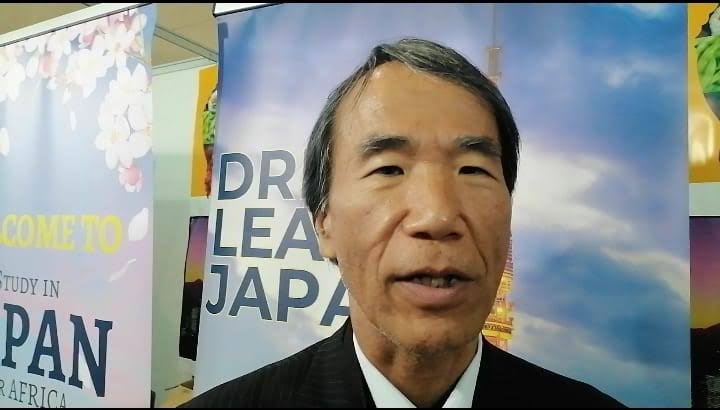
Speaking at the signing ceremony in Harare on Monday, Japanese Ambassador to Zimbabwe, Nobutaka Maekawa, said the project would help address barriers to quality education while creating better conditions for both pupils and teachers.
“Through this project, we will support the construction of two classroom blocks, an ablution block and a teachers’ cottage,” said Ambassador Maekawa.
“We believe that these new facilities will enable the school to accommodate Grade 6 and Grade 7 pupils, reduce overcrowding, and provide a more conducive learning environment for all pupils.”
Tanaka Primary School was established by World Vision International Zimbabwe in 2022 as the second public school in Ward 10 of Mbire District, with the aim of improving access to quality education in the area.
However, a shortage of classroom facilities has prevented the school from enrolling Grade 6 and Grade 7 pupils, forcing children to travel more than seven kilometres from their homes to attend other schools.
The situation has also resulted in overcrowding among Early Childhood Development (ECD) A and B classes, as well as Grades 1, 2 and 4, with some pupils occasionally compelled to learn outdoors under conditions that make concentration and effective learning difficult.
The project will also address the shortage of teachers’ accommodation, which has emerged as another challenge affecting the school.
Ambassador Maekawa said the school had only one teachers’ house accommodating six people despite having 10 teachers, leaving four teachers to live and sleep in a staff room measuring approximately 10 square metres.
He said the inadequate living conditions could make it difficult to retain teachers and potentially affect the quality and continuity of education for pupils.
The new infrastructure is expected to enable the school to accommodate more learners, ease pressure on existing classrooms and provide teachers with better living conditions, supporting the delivery of quality education in the community.
Ambassador Maekawa said the project reflected Japan’s commitment to supporting locally driven initiatives that respond directly to community needs.
“GGP adopts a bottom-up approach, supporting projects that respond directly to the needs of local communities at grass-root level,” he said.
“These locally driven initiatives foster a strong sense of ownership among the people to be served under this GGP. This ownership is an important factor in the successful implementation and sustainability of projects.”
He revealed that since the programme was introduced in Zimbabwe in 1989, a total of 167 projects had been implemented across the country, many of which continued to make a positive difference in local communities.
The Tanaka Primary School project was selected from more than 30 applications following a screening process, with Japan expressing confidence in World Vision International Zimbabwe’s capacity to implement the initiative effectively and responsibly.
However, Ambassador Maekawa cautioned that the signing ceremony marked only the beginning of the undertaking, urging all stakeholders to ensure that the grant was used responsibly and transparently.
“The hard work starts now. The beneficiary communities are looking forward to seeing the positive change this project will deliver,” he said.
“I encourage all stakeholders to make effective and responsible use of this grant, with the highest standards of integrity, transparency and accountability.”
He expressed hope that the successful implementation of the project would create greater educational opportunities for children in Mbire and contribute to Zimbabwe’s development.
Japan’s grassroots assistance programme supports community-level projects designed to improve people’s lives, with the Tanaka Primary School initiative expected to help address infrastructure gaps that have limited access to a more conducive learning environment for pupils in the district.
New Ziana