
By Zachary Gava
Hatcliffe, (New Ziana) – President Emmerson Mnangagwa has launched an expanded agricultural mechanization facility aimed at widening farmers’ access to affordable farming equipment to increase productivity and strengthen national food security.
The facility, launched at the Institute of Agricultural Engineering in Hatcliffe on Wednesday, will enable smallholder, medium-scale and large-scale farmers to acquire tractors, farming implements and other essential machinery through structured financing arrangements supported by financial institutions.
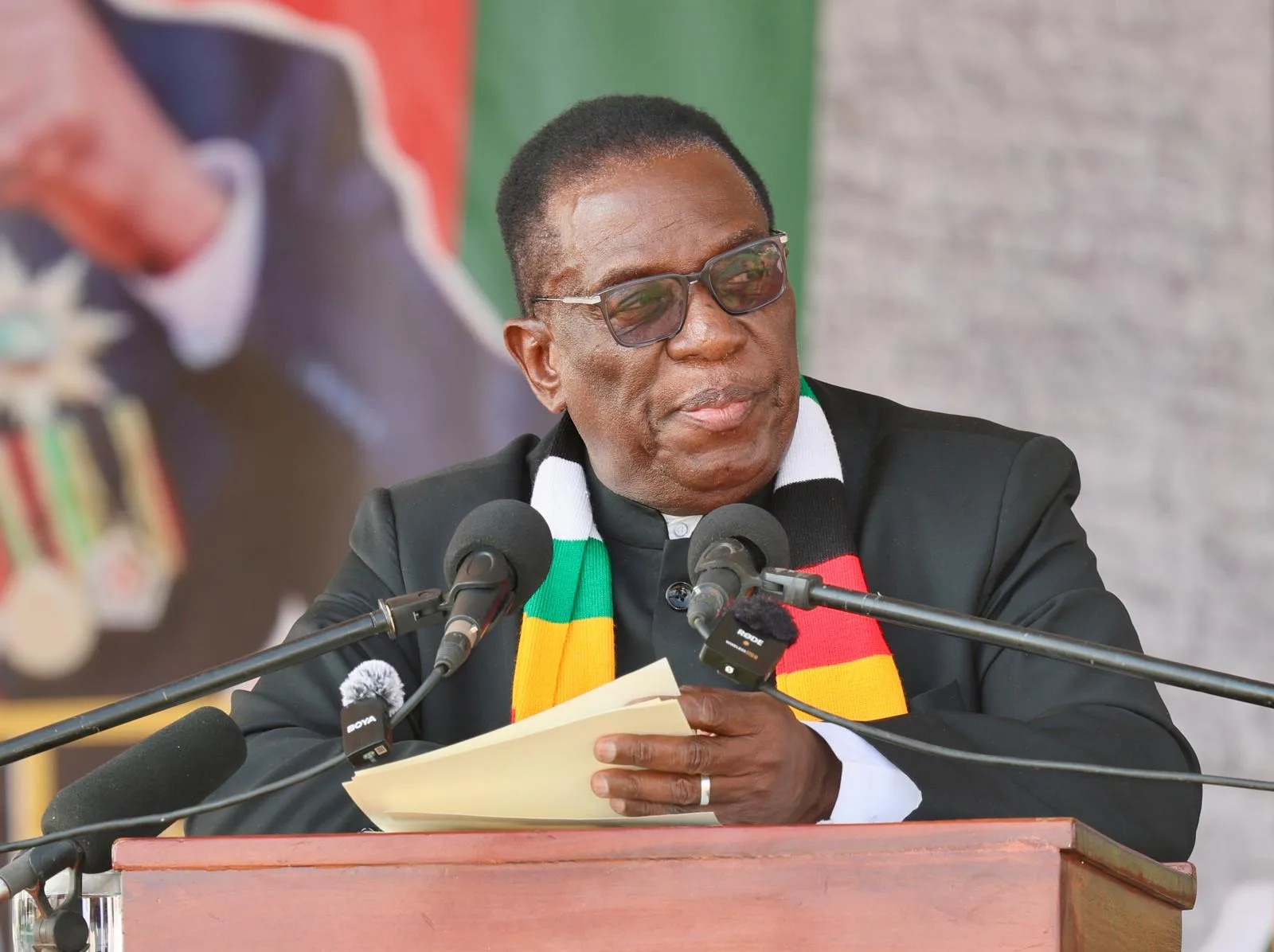
Speaking at the launch, President Mnangagwa said mechanization was central to the country’s agricultural transformation agenda and efforts to achieve an upper middle-income economy by 2030.
“Today’s occasion represents much more than the distribution of farming equipment, including tractors and other agricultural equipment. It is a deliberate national investment in the productive capacity of our farmers, especially smallholder farmers, and the broad-based economic empowerment of all our communities,” he said.
He said Government was determined to move the country away from predominantly manual and labor-intensive farming towards modern, commercially oriented and technology-driven agricultural production systems.
The initiative comes as Zimbabwe implements the Agriculture Food Systems and Rural Transformation Strategy 2, covering the 2026-2030 period, which places emphasis on climate-smart agriculture, precision farming, mechanization and modernization.
President Mnangagwa said mechanization should no longer be the preserve of farmers with substantial financial resources, but an accessible instrument for improving productivity across the agricultural sector.
“Our objective is to ensure that mechanization is no longer a privilege for farmers with substantial financial resources. Under my administration, mechanization and support will remain an accessible, productive instrument for Zimbabwean farmers across the broad agricultural spectrum,” he said.
The President said the facility would provide multiple financing pathways for farmers, individual agricultural enterprises, mechanization service centres and village business units.
He said mechanization service centres, including those operated by institutions such as the Rural Infrastructure Development Agency (RIDA) and AFC, would benefit from the programme, particularly in providing services to farmers unable to purchase expensive machinery individually.
Village business units in rural wards across the country’s provinces, including those operated by youths and war veterans, have also been identified as beneficiaries.
President Mnangagwa challenged the business units to maintain sound management systems, transparent bookkeeping, proper equipment maintenance arrangements and sustainable financial models.
He said the country’s mechanization drive had recorded significant progress since the advent of the Second Republic in 2017, with the national tractor fleet increasing from 6 300 to 18 740.
The number of combine harvesters had also increased from 302 in 2017 to 486, representing a 61 percent growth, while Belarus mechanization facilities alone had contributed 3 051 tractors.
However, President Mnangagwa said Government was now looking beyond equipment imports by exploring opportunities for local manufacturing and assembly of agricultural machinery.
“I want to challenge institutions of higher learning and stakeholders in the agriculture ecosystem to continue developing synergies for innovation and reverse engineering,” he said.
He said the impact of mechanization investments was already evident in the country’s wheat production, which reached a historic 670 000 metric tonnes during the 2026 season.
The President also highlighted the growth of the Pfumvudza/Intwasa programme, whose cultivated area had expanded from 320 732 hectares at its launch in 2020 to a target of one million hectares during the current season.
The facility is being implemented through partnerships with several financial institutions, including CBZ Bank, AFC Bank, Women’s Empowerment Bank, POSB, ZB Bank, Bank ABC, Youth Empowerment Bank and SMEDCO.
President Mnangagwa said the programme would complement other Government interventions in irrigation development, strategic grain storage and rural infrastructure, which are intended to address supply chain bottlenecks and improve farmers’ access to markets.
He called on beneficiaries to ensure that machinery acquired under the facility was properly utilized and maintained, while meeting their financial obligations to sustain the programme.
New Ziana