

Norman Dururu
NEMBUDZIYA – For years, travelling long distances to access cervical cancer screening services has been a major challenge for women in remote communities of Gokwe North. Some have missed out on potentially life-saving medical care because they could not afford the transport costs.
But for women such as Constance Gombiro of Matambo Village, under Chief Chireya, the arrival of free outreach screening services has brought renewed hope, allowing them to access essential healthcare without travelling long distances.
Gombiro was among the women who welcomed the Government’s decentralisation of Visual Inspection with Acetic Acid and Cervicography (VIAC) services, supported by the National AIDS Council (NAC). She said the programme had brought a service they previously knew little about closer to their communities.
“I was happy when I heard about this programme because, as women, we have found it difficult to access these services. We did not know where to go or how to get screened and treated for this disease.
“We are happy that the programme has come to us here in rural areas,” she said.
Her experience reflects the difficulties faced by many women in the district, where geographical isolation, poor road networks and transport costs have often stood between rural communities and essential health services.
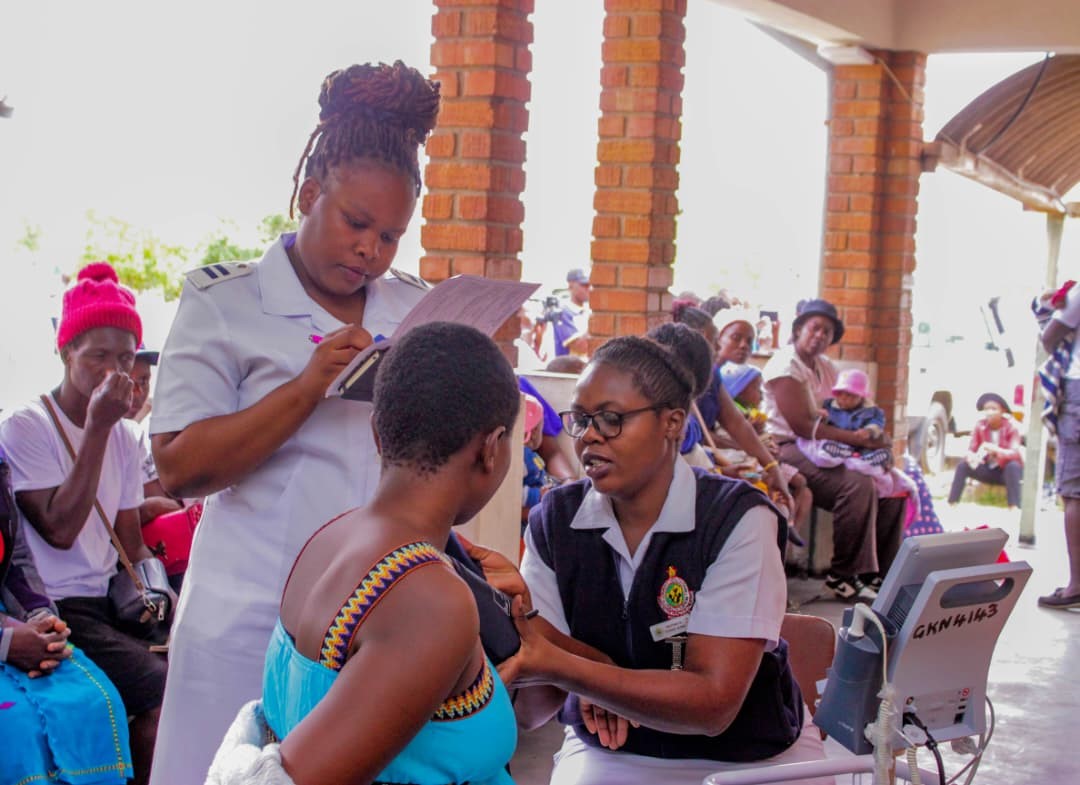
During a NAC media tour at Gokwe North District Hospital, women who had accessed the screening services said bringing healthcare closer to communities was making a significant difference, particularly for those who had gone years without screening.
Memory Muzenda of Nyahurungwe Village said she had travelled to Nembudziya after learning about the screening programme. She had missed an earlier outreach visit to her home area.
“I have come here to Nembudziya because we heard there is a cancer screening programme.
“The programme came to Nyahurungwe, our home area, but I was not there and missed that outreach,” she said.
For Shumirai Chenhare of Nembudziya, the opportunity to finally undergo screening was equally significant.
She said women sometimes postponed seeking medical attention, making community-based screening initiatives important in encouraging them to prioritise their health.
“It has been a long time, and I am happy that I am finally receiving this service at my advanced age.
“As women, we sometimes ignore or postpone visiting health facilities, but I am happy that we have been screened,” she said.
Behind these personal experiences is a district health programme seeking to overcome considerable geographical and resource challenges.
Gokwe North District Nursing Officer Caritas Mbombe said the district’s VIAC services catered to a population of approximately 256,000 people across 30 health facilities, including the district hospital.
However, services remain largely centralised at the district hospital, leaving 29 other health facilities without permanent VIAC screening services.
Women from these facilities are referred to the district hospital, making access difficult for those living in remote communities.
Mbombe said NAC donated a VIAC camera in April 2025, enabling the district to screen 200 women.
Between January and November this year, the district screened 795 women, 394 of whom were reached through outreach programmes across the district.
Of those screened, approximately 11 received positive results and were treated, while those requiring further management were referred to the provincial hospital.
The district has also conducted human papillomavirus (HPV) DNA testing, with 91 women testing positive.
Despite this progress, Mbombe said reaching women in some parts of the district remained a major challenge. The furthest health facility is about 195 kilometres from the district hospital.
“When we conduct outreach programmes, we reduce the distances women have to travel, and communities are very happy because they can access services closer to their homes,” she said.
The district has more than 56,000 women of childbearing age who need access to cervical cancer screening, Mbombe said, but limited equipment, lighting and transport continue to restrict the number who can be reached.
Mbombe said the district could conduct only one outreach per week and, with NAC’s assistance, managed to conduct between five and 10 outreaches each month.
She added that the same camera used during outreach programmes was required at the district hospital, meaning services there could be disrupted when the equipment was taken into communities.
Transport and fuel shortages also made it difficult to reach facilities scattered across the vast district. Some community members could not walk the distances required to access healthcare.
NAC Gokwe North District AIDS Coordinator Trichard Ncube said the organisation stepped in after a needs assessment revealed that women in the district were struggling to access VIAC services.
Ncube emphasised that cervical cancer screening was important for all women, irrespective of their HIV status.
For women such as Gombiro, Muzenda and Chenhare, the programme represents an opportunity to take charge of their health without the burden of travelling long distances.
However, with thousands of women still requiring screening, sustained investment in equipment, transport and outreach programmes will be critical to ensuring that no woman in Gokwe North is left behind.