
By Simbarashe Muparaganda
Bulawayo, (New Ziana)-The Zimbabwe Stock Exchange (ZSE) All Share Index rose 68.5 percent in United States dollar terms in the first 7 months of the year, the strongest gain among 17 African bourses tracked, an official has said.
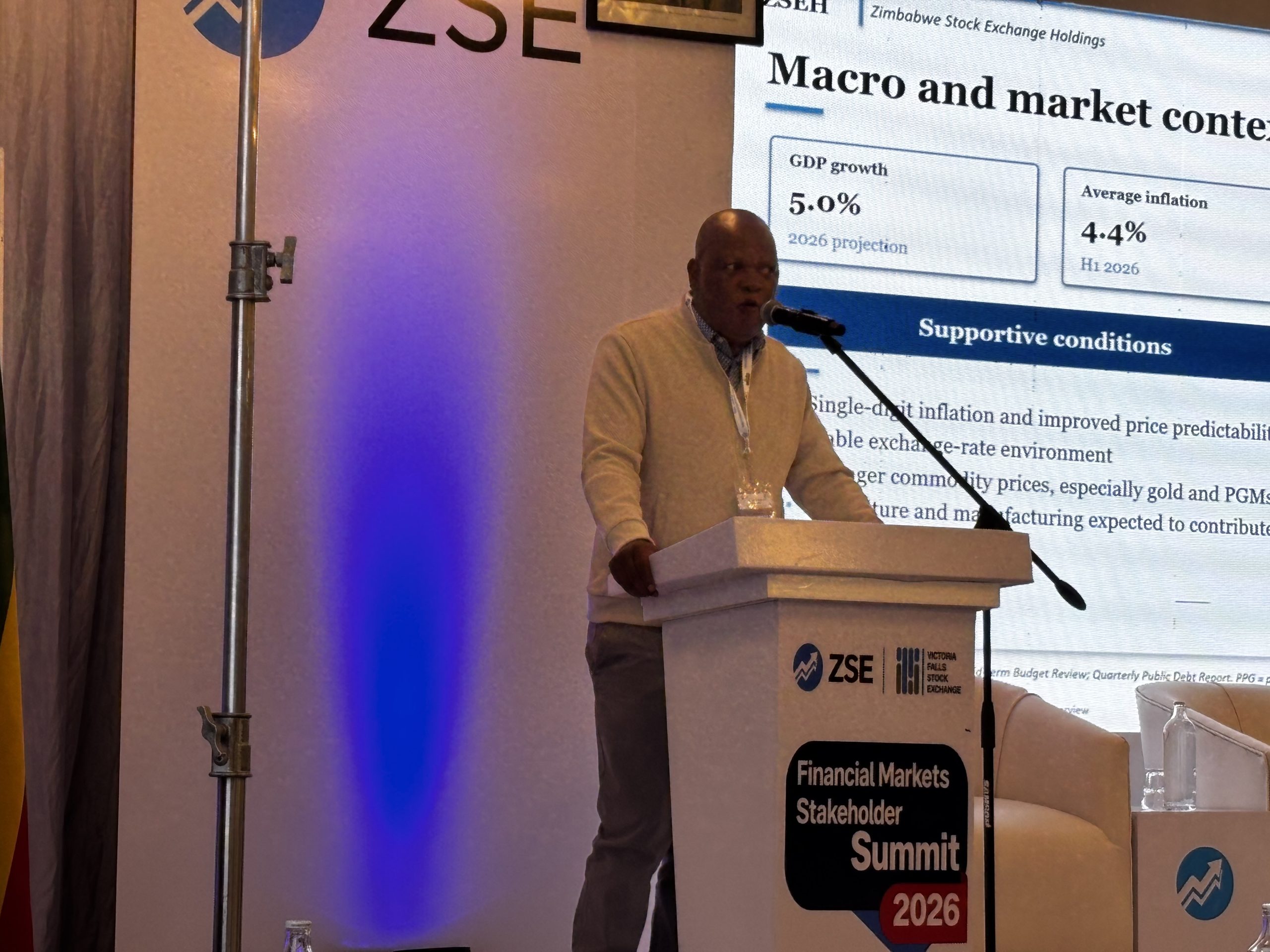
ZSE chairman Martin Mushambadope said this on Tuesday while addressing delegates attending the inaugural Financial Markets Stakeholders Engagement Summit in Bulawayo.
The summit is running under the theme “Shaping the Future of Zimbabwe’s Financial Markets: Connecting Capital, Innovation and Opportunity.”
“Trading activity also strengthened across the country’s two exchanges. In the first half of the year, value traded on the ZSE reached ZiG $7.6 billion, three times last year’s level, while trading on the US dollar-denominated Victoria Falls Stock Exchange(VFEX) doubled to US$166 million,” said Mushambadope.
He attributed the market’s performance to fast improving economic conditions, including annual inflation of 3.7 percent reported by the International Monetary Fund (IMF), projected growth of 5 percent this year, as well as the Reserve Bank of Zimbabwe’s reduction of its policy rate from 35 percent in June to 27.5 percent.
Mashambadope also said the country’s reserves have exceeded US$2 billion, adding however, that rising share prices and activity do not by themselves show whether markets are directing enough money into businesses.
“A rising index measures price. A capital market is measured by the capital it collects,” he said, noting that the ZSE had recently traded between 7 million and 20 million ZiG a day, less than US$1 million.
Mushambadope pointed to the gap between institutional savings and the capital available to issuers.
“Pension funds held about US$3.5 billion at the end of June, according to IPEC, while the ZSE’s total market value was roughly US$2 billion. Short-term insurers held more than US$500 million, yet about 38 percent of pension assets remained invested in property,” he said.
He argued that deeper market would give pension funds more options in listed equities, corporate debt and infrastructure, while assisting businesses secure long-term financing, adding that investment approvals also showed the opportunity to bring more local capital into growth.
“The Zimbabwe Investment and Development Agency (ZIDA) licensed US$1.92 billion in projected investment in the first quarter, led by energy, mining and financial services,” he said, adding that only about 5 percent of the investment was locally financed.
Mashambadope cited digital platforms, tokenisation and fractional ownership as potential ways to lower the cost of reaching small and diaspora investors, speed up settlement and make markets easier to supervise.
He said the exchanges are expanding their range of products, adding that the ZSE now lists four exchange-traded funds and two real estate investment trusts, while the Victoria Falls Exchange (VFEX) has welcomed at least five new listings this year.
“A US$25 million Pfuma REIT public offer was fully subscribed in February,” he said.
Mushambadope also highlighted the launch of the Zimbabwe Entrepreneurial Exchange (ZEEX) early this year in Bulawayo as a route for small and medium-sized enterprises (SMEs), which make up 76 percent of Zimbabwean businesses and employ more than 70 percent of workers, according to the 2025 economic census, to access capital.
He outlined four summit priorities, namely regulatory certainty and investor protection, channelling institutional savings into productive assets, building a pipeline of investment-ready issuers, and improving liquidity and market infrastructure.
New Ziana