

By Archford Chirimudombo
Harare, (New Ziana) – A Tanzanian delegation is in Zimbabwe to gain insights into the country’s domestic financing model for its HIV and AIDS response, as African nations increasingly seek sustainable alternatives amid declining donor support.
The visit comes barely a month after a Ugandan parliamentary delegation on HIV/AIDS and Related Matters visited Zimbabwe and expressed interest in replicating its funding model to help bridge Uganda’s US$78 million HIV financing gap.
The Tanzanian delegation is led by AIDS Trust Fund board chairperson Sabasaba Mwoshingi.
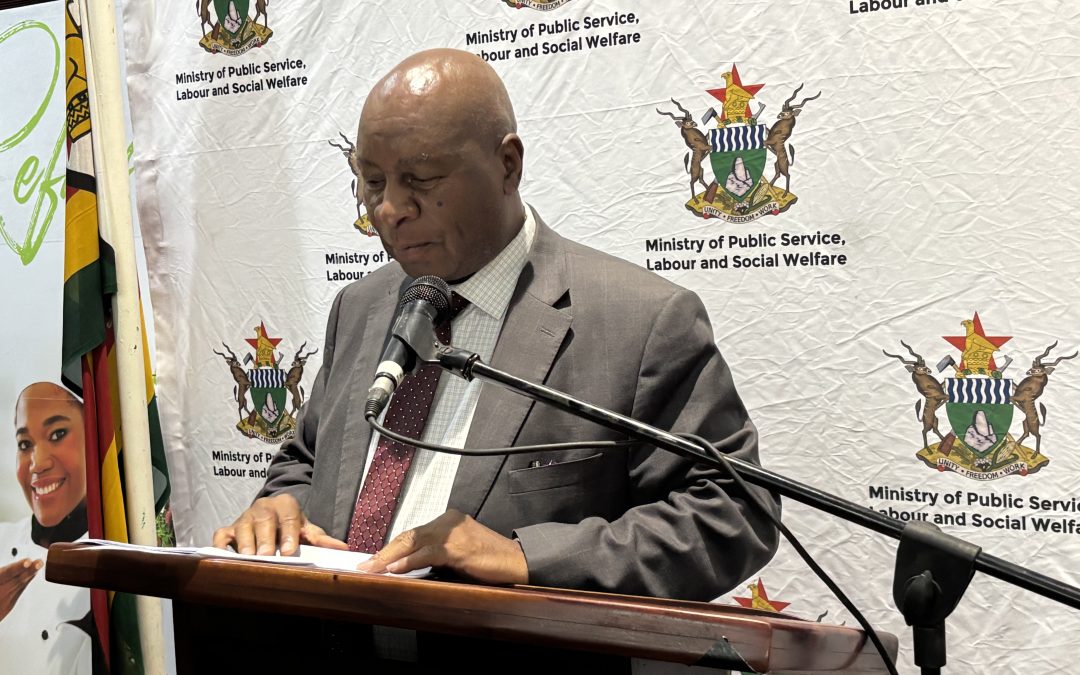
Welcoming the delegation in Harare, Health and Child Care Minister Dr Douglas Mombeshora said Zimbabwe valued the opportunity to share its experiences in mobilising domestic resources to finance the national HIV response.
He said sustainable HIV programmes required strong national ownership, reliable domestic funding, effective institutions and strategic partnerships to maintain the gains made in fighting the epidemic.
“Zimbabwe recognises that a sustainable HIV response must be anchored in national ownership, predictable domestic financing, strong institutions and effective partnerships,” Dr Mombeshora said.
A central pillar of Zimbabwe’s financing strategy is the National AIDS Trust Fund, popularly known as the AIDS Levy, which provides a dedicated domestic funding stream for HIV-related programmes.
The fund demonstrates the Government’s commitment to taking greater responsibility for financing national HIV priorities while reducing over-reliance on external support.
Resources mobilised through the levy are distributed according to an annual work plan and budget. Approximately 50 percent is allocated to treatment, care and support, while 12 percent goes towards prevention interventions.
The remaining funds cater for programme implementation, logistics, monitoring and evaluation, coordination and other essential operational activities.
Dr Mombeshora said the resources were strategically deployed to address critical programme requirements and financing shortfalls, complementing Government Treasury allocations and contributions from development partners.
He emphasised that domestic financing was intended to strengthen existing partnerships rather than replace them, while ensuring the long-term sustainability of HIV programmes.
The minister said Zimbabwe had also established accountability mechanisms to track expenditure, evaluate programme performance and determine whether investments were producing measurable improvements in health outcomes.
These include National AIDS Spending Assessments, annual health sector resource mapping, National Health Accounts and routine programme performance reviews.
Government is further strengthening accountability through its Integrated Results-Based Management framework, which connects institutional performance, budget utilisation and the achievement of agreed service delivery targets.
“Our guiding principle is that we must account not only for the resources spent, but also for the results achieved,” Dr Mombeshora said.
He added that Zimbabwe’s HIV response was guided by a multi-sectoral approach, recognising that combating the epidemic required participation beyond the health sector.
The strategy brings together Government ministries, local authorities, civil society organisations, communities, the private sector and development partners to ensure coordinated implementation of national programmes.
The minister said coordination structures were designed to connect national priorities with provincial and district-level implementation, ensuring that commitments translated into services accessible to communities.
He cautioned, however, that countries should develop financing models suited to their respective economic conditions, institutional capacities and programme requirements.
Mwoshingi said Zimbabwe was selected because of its progress in mobilising domestic resources through the National AIDS Council (NAC).
“We chose Zimbabwe because of information we received that the National AIDS Council (NAC) is far ahead of us in terms of mobilising internal resources, and we thought as a board this would be an important visit to come and see how best Zimbabweans are doing it.
“With donor support from traditional Western partners and global funds waning across the Global South, domestic resource mobilisation has become an urgent priority for African nations to ensure continuity in treatment, care, and training programmes,” he said.
New Ziana