
By Zachary Gava
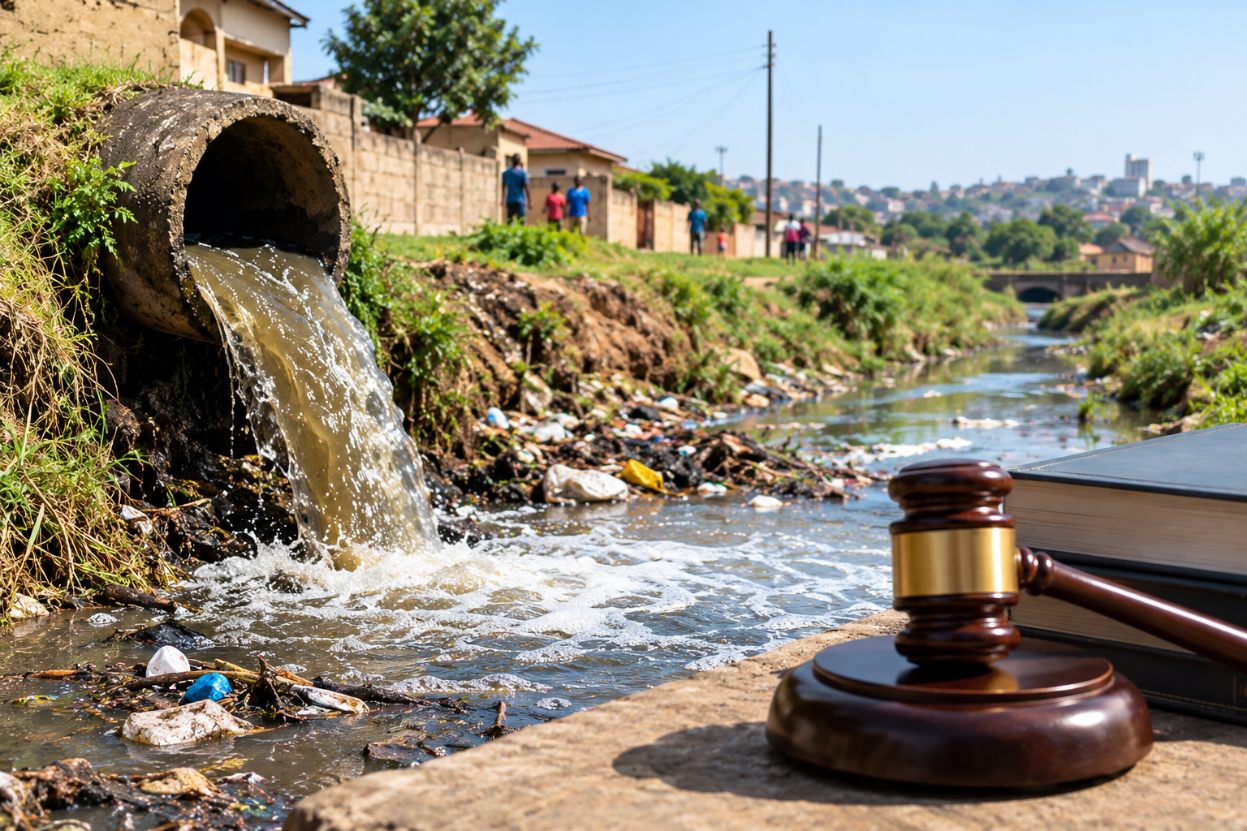
Harare, (New Ziana) – The stench of raw sewage in residential streets, overflowing drains and polluted rivers tells a story no community should have to endure.
Behind every burst sewer pipe is a potential threat to a family’s health and behind every stream contaminated by human waste is an ecosystem struggling to survive.
For residents of Harare and Chitungwiza, the battle for a clean environment has become a daily reality, fought not only against pollution but also against failing sanitation infrastructure and years of inadequate remedial action.
Now, the Environmental Management Agency (EMA) has secured two important legal victories, taking its campaign against sewage pollution to the High Court of Zimbabwe and emerging with orders compelling the two local authorities to comply with environmental law.
In football terms, EMA has scored a brace against environmental negligence. But while the legal scoreboard reads 2–0, the decisive victory will only come when raw sewage stops flowing into rivers, treatment plants are restored to working order and residents can live without the fear of contaminated water.
The High Court orders against Harare City Council and Chitungwiza Municipality mark an important moment in the enforcement of environmental protection, shifting the focus from repeated warnings to legally enforceable obligations.
In the Harare case, handed down on October 2, 2026, under Case Number HCH2610/25, the court ordered the city to implement measures directed by EMA to properly manage solid waste, prevent unlawful sewage discharges and rehabilitate, repair and upgrade its sewage treatment plants and sewer systems.
A separate order against Chitungwiza Municipality, issued on September 30, 2026, under Case Number HCH3235/25, restrains the local authority from unlawfully discharging raw or untreated sewage into water sources, water bodies or the environment. It also requires the municipality to take lawful and reasonably practicable measures to prevent such pollution.
For EMA, the rulings strengthen its hand. Should either local authority disregard the orders, the agency can pursue contempt of court proceedings.
Yet the significance of these judgments extends far beyond the courtroom. They concern the quality of water people depend on, the safety of neighbourhoods where children play and the health of rivers that sustain life.
The human cost of the crisis is perhaps most apparent in Chitungwiza, where residents have previously described the misery of living alongside raw sewage.
In July 2026, the Chitungwiza Residents Trust and residents approached the High Court seeking intervention over a longstanding sewage crisis. Their complaints included sewage flowing into homes, foul odours, concerns about contaminated domestic boreholes and sewage accumulating near schools.
The residents’ accounts, reported by Zimbabwe Lawyers for Human Rights, illustrated how a breakdown in sanitation services can turn an ordinary home into an unsafe living environment.
For a parent, the concern is not simply an unpleasant smell. It is whether children can walk to school safely, whether water used at home is free from contamination and whether the family can escape exposure to sewage flowing through its surroundings.
Such conditions also raise wider environmental concerns. Untreated wastewater carries organic matter, nutrients and disease-causing microorganisms into the environment. Excess nutrients can encourage excessive algal growth, while the decomposition of organic waste consumes dissolved oxygen that fish and other aquatic organisms need to survive.
When sewage enters rivers, pollution does not respect municipal boundaries. Contaminants can travel downstream, affecting communities and ecosystems far removed from the point of discharge.
The two court victories come against a backdrop of mounting evidence that Zimbabwe’s urban wastewater management systems are under severe pressure.
A September 2026 report by Parliament’s Portfolio Committee on Environment, Climate and Wildlife found that only 20 of the country’s 63 sewage treatment plants were functional. The report pointed to deteriorating infrastructure and failures in wastewater management across Harare and Chitungwiza, among other concerns.
The findings suggest that the crisis cannot be addressed through enforcement alone. Ageing sewer networks, inadequate maintenance, insufficient treatment capacity and urban growth that has outpaced infrastructure provision all demand attention.
Where sewer pipes break, pumping systems fail or treatment facilities cannot adequately process incoming wastewater, sewage can escape into residential areas and waterways. Without sustained investment, repairs may address individual breakdowns without resolving the underlying weaknesses.
EMA has previously warned that most monitored urban rivers are failing to meet national dissolvedoxygen standards, while phosphate concentrations in some rivers have reached as much as 12 times permissible limits.
The agency also estimated that 415 megalitres of raw and partially treated sewage were being discharged into the environment daily in the reports underpinning the latest court action.
These figures transform what may appear to be isolated municipal service-delivery failures into a much wider environmental emergency.
The judgments provide an opportunity to move beyond a cycle of complaints, warnings and recurring sewer bursts. But court orders must translate into visible improvements on the ground.
First, Harare and Chitungwiza need clear, costed rehabilitation programmes prioritizing collapsed sewer lines, malfunctioning pumping stations and treatment plants responsible for major pollution incidents. Emergency repairs should be followed by scheduled maintenance and upgrades designed to accommodate growing populations.
Second, local authorities should demonstrate how money collected through water, sewerage and other relevant service charges is being used to maintain sanitation infrastructure. Transparent budgeting, expenditure reporting and independent audits would help residents establish whether resources intended to support services are delivering results.
Third, EMA should regularly publish accessible water-quality monitoring results and report on compliance with the court orders. Public reporting should identify pollution hotspots, document corrective measures and explain where further enforcement is necessary.
Fourth, central government and local authorities need to develop sustainable financing arrangements for wastewater infrastructure. This includes prioritizing sanitation in public investment programmes, improving revenue collection and accountability, and exploring appropriately structured partnerships where they can deliver affordable and effective services.
Finally, residents must have accessible channels to report burst sewer pipes, illegal discharges and persistent pollution. Community participation cannot replace municipal responsibility, but it can help authorities identify problems early and make public accountability more effective.
EMA’s two court victories are a welcome assertion that environmental laws must be respected, including by institutions responsible for providing essential public services.
However, the real test will be whether the orders bring an end to unlawful sewage discharges and deliver lasting improvements to the country’s urban rivers and communities.
A successful environmental enforcement campaign should ultimately be measured not by the number of cases won, but by the pollution prevented, the infrastructure restored and the people protected.
For residents living with overflowing drains, the first sign of victory will be a repaired sewer. For a river burdened by untreated waste, it will be cleaner water and recovering aquatic life. For families, it will be greater confidence that their surroundings are safe and that public institutions are taking their concerns seriously.
EMA have secured a brace in the courtroom, an excellent start, but going forward, Zimbabwe’s environmental championship should eventually be won through sustained investment, responsible municipal management and consistent enforcement.
New Ziana