

By Johnson Siamachira
Harare, (New Ziana) – Zimbabwean farmers are being encouraged to expand production of orange-fleshed sweet potatoes as the crop offers opportunities to improve household nutrition, withstand increasingly erratic weather and supply growing agro-processing markets.
The push reflects efforts to diversify agricultural production beyond traditional crops while linking smallholder farmers to commercial markets and nutritious food products.
Dr Jacob Gusha, managing director of the University of Zimbabwe Agro-Industrial Park (UZAIP), described orange-fleshed sweet potatoes (OFSP), including the Alisha, Delvia and Beauregard varieties, as a crop of growing strategic importance to Zimbabwe’s agricultural sector.
“Orange-fleshed sweet potatoes are now a crop of strategic interest in Zimbabwe,” he said.
Speaking at a farmer training and technology demonstration programme at the Agro-Industrial Park in Mazowe Wednesday, Dr Gusha urged growers from Mt Darwin and Murehwa to produce the crop for both household consumption and commercial markets.
He said the university’s agro-industrial facilities offered farmers opportunities to supply sweet potatoes for processing, including bread production, potentially creating a market beyond conventional fresh-produce sales.
HarvestPlus Solutions Zimbabwe representative Lawrence Mjere said the crop was shedding its image as a neglected food source and gaining recognition as a commercial opportunity with potential for domestic processing and export markets.
He said its relatively low water requirements, drought tolerance and availability of early-maturing varieties made it a useful option for farmers adapting to changing weather patterns.
However, Mjere urged farmers to approach production as a family business, paying attention to the entire value chain, from obtaining quality planting material and applying sound agronomic practices to harvesting, post-harvest handling and marketing.
The training covered vine multiplication and preservation, land preparation, planting, spacing, soil fertility, irrigation, weed control and pest and disease management.
Farmers also learnt to calculate production costs, labour requirements, expected yields, gross margins and break-even points to help them assess the commercial viability of growing the crop.
HarvestPlus representative Patience Mukweza urged farmers to retain part of their harvest for household consumption rather than sell everything.
“Nutrition starts from the field, not the pharmacy,” she said.
The orange flesh indicates the presence of beta-carotene, which the body converts into vitamin A, a nutrient essential for healthy vision, immune function and normal growth.
The crop could help address Zimbabwe’s micronutrient deficiencies. HarvestPlus estimates that about one in five children under five in the country suffers from vitamin A deficiency, which can weaken immunity and impair vision.
Zimbabwe introduced vitamin A-rich orange-fleshed sweet potatoes in 2021 following research involving the Department of Research and Specialist Services, HarvestPlus and international agricultural research partners. Trials assessed varieties for yield, disease tolerance and consumer preferences across different farming environments.
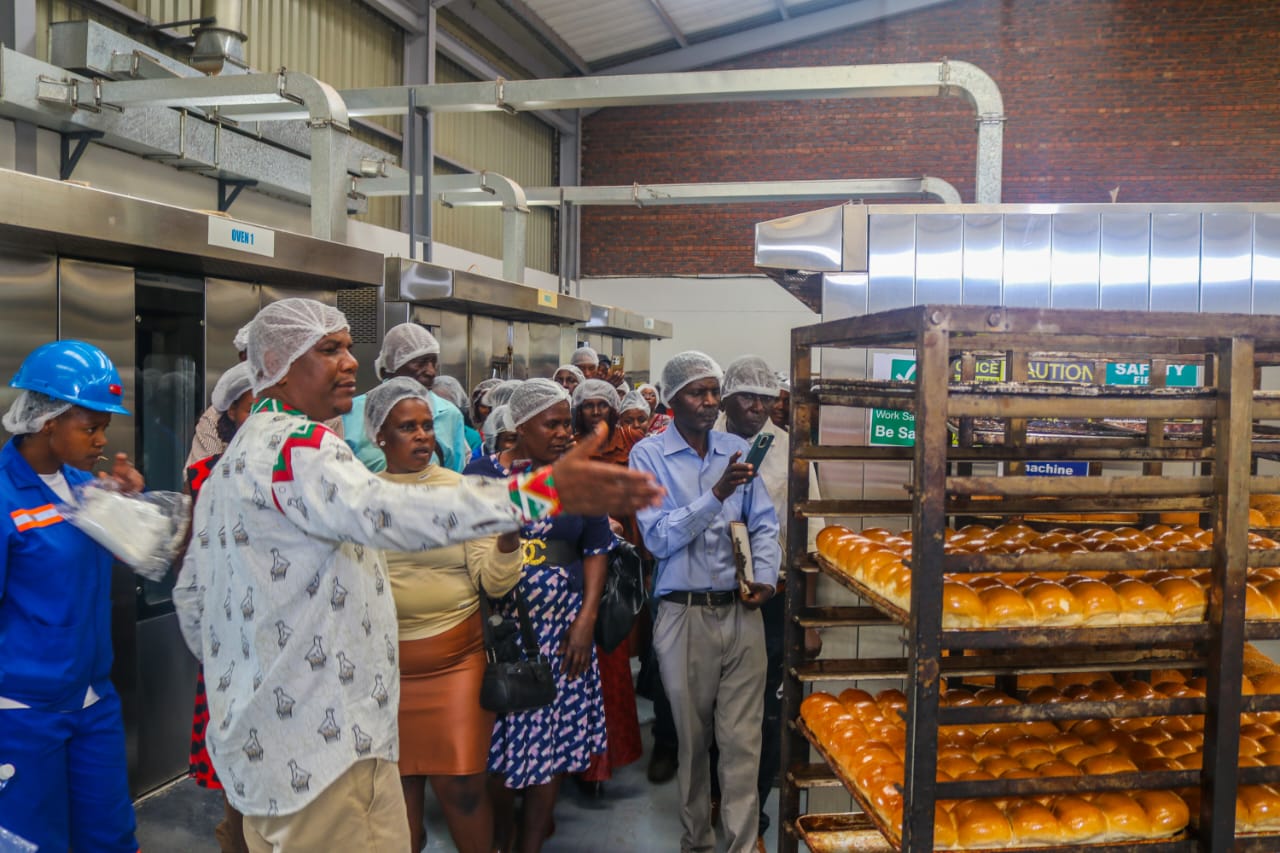
The programme also featured field demonstrations and a tour of the university’s bakery, where farmers observed how processors turn sweet potatoes into bread.
Discussions with agro-industrial stakeholders covered raw-material quality, supply volumes, potential purchasing arrangements, delivery requirements and commercial conditions.
The initiative brought together the University of Zimbabwe Agro-Industrial Park, university faculties and HarvestPlus Solutions Zimbabwe.
As Zimbabwe seeks to diversify agricultural production amid increasingly unpredictable rainfall, the challenge will be to translate farmers’ interest in the crop into reliable supplies of quality planting material, consistent production and dependable markets.