
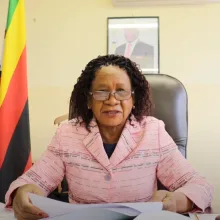
Harare, (New Ziana) — Zimbabwe must do more to tell the world about its wildlife conservation achievements while ensuring that communities living alongside animals benefit from protecting them, Environment, Climate and Wildlife Minister, Dr Evelyn Ndlovu said on Tuesday.
Speaking in Harare during a courtesy visit by Azzedine Downes, president and chief executive of the International Fund for Animal Welfare (IFAW), Dr Ndlovu said the country’s conservation record offered opportunities to promote sustainable tourism, rural enterprise and biodiversity conservation. Downes was accompanied by a high-powered IFAW delegation.
“Human-wildlife conflict remains one of the most pressing conservation and development challenges facing our country,” she said. “It affects families, undermines livelihoods, threatens food security and, if left unaddressed, can erode public confidence in conservation itself.”
Zimbabwe is home to one of the world’s largest elephant populations and has invested in protected areas, wildlife management and community-based conservation. However, crop destruction, livestock losses and attacks on people remain major challenges for rural communities bordering national parks and other wildlife habitats.
Dr Ndlovu said the government wanted wildlife to generate economic opportunities rather than impose hardships on communities. She cited community conservancies, nature-based tourism, beekeeping, fisheries and the processing of natural products as potential sources of income.
She said the country’s conservation framework, including the Parks and Wildlife Amendment Act and National Wildlife Policy, sought to strengthen community participation, sustainable resource use and equitable sharing of benefits.
Zimbabwe’s Communal Areas Management Programme for Indigenous Resources (CAMPFIRE) links wildlife management with rural livelihoods. The programme operates across dozens of rural districts, although the benefits communities receive vary with wildlife resources, tourism revenues and management capacity.
Speaking at the same occasion, Downes said conservation organisations should invest in preventing threats to wildlife rather than waiting for species and habitats to reach crisis point.
“Conservation cannot dedicate itself exclusively to pulling species back from the brink,” he said. “It must also be about ensuring fewer species reach that brink in the first place.”
He called for sustained investment in scientific research, habitat protection and community capacity, arguing that wildlife recovery and ecosystem restoration often take longer than conventional funding cycles.
The meeting also highlighted the long-term partnership between IFAW and the Zimbabwe Parks and Wildlife Management Authority (ZimParks), established in 2019 to protect wildlife and habitats in northwestern Zimbabwe.
ZimParks Director-General Professor Edson Gandiwa said the partnership had strengthened conservation operations in the Hwange-Matetsi-Zambezi landscape, including efforts to improve ranger capacity, combat poaching and protect wildlife movement routes.
The partnership expanded in 2023 into a 25-year agreement valued at US$50 million, according to the organisations. Its work includes habitat connectivity, wildlife monitoring and measures to reduce conflict between people and animals.
IFAW also supports satellite tracking of elephants under its Zimbabwe flagship Room to Roam initiative. The technology helps conservationists map animal movements and identify corridors that could inform land-use planning and efforts to warn communities when elephants approach settlements.
Phillip Kuvawoga, IFAW’s senior director for landscape conservation, said scientific evidence could help authorities anticipate wildlife movements and improve responses to human-wildlife conflict.
Zimbabwe’s conservation challenge extends beyond protected areas. Its elephants move through communal lands and across international borders, making cooperation among governments, conservation organisations and local communities essential.
Dr Ndlovu said lasting conservation success depended on ensuring that people living alongside wildlife shared fairly in its benefits.
For Zimbabwe, the task is to protect its wildlife heritage while making conservation compatible with the safety, food security and livelihoods of rural communities.
New Ziana