
By Thabisani Dube
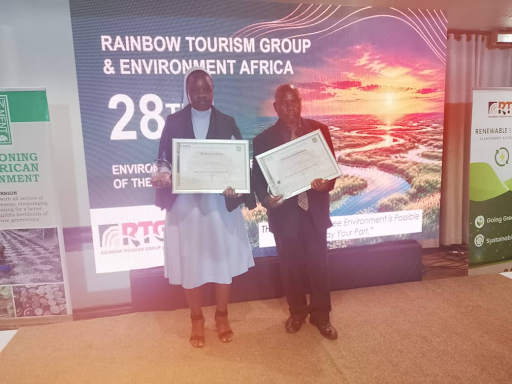
HARARE – New Ziana journalists Johnson Siamachira and Thabisani Dube won multiple honours at the 28th Environmental Reporter of the Year Awards held at Rainbow Towers Hotel in Harare on Wednesday, with Siamachira winning Best Water and Sanitation Story and Dube securing two runner-up positions.
Siamachira also emerged runner-up in four categories: Best Wildlife Conservation Story, Best Sustainable Forest Management Story, Best Waste Management and Recycling Story, and Best Climate Change Story.
Dube was runner-up in Best Responsible Mining Story and Best Wetlands Conservation and Sustainable Management Story, adding to the news agency’s strong showing at the annual awards.
The ceremony, held under the theme, “A plastic-free environment is possible, play your part”, recognised journalists whose work highlights environmental challenges and solutions.
Fairness Moyana was named the overall Environmental Reporter of the Year 2026 after winning both the Best Sustainable Livelihoods Story and Best Climate Change Story categories with his story, “When Crops Fail, Insects Feed Communities”.
The awards attracted 332 entries across 10 categories, according to head judge Violet Makoto, who said the judging panel assessed the submissions over two days.
Environment Africa representative Fortune Chafirenyika, speaking on behalf of board member Cyprian Chabepi, said the organisation’s partnership with Rainbow Tourism Group had helped promote environmental stewardship and recognise the role of journalists in highlighting environmental challenges affecting communities.
Rainbow Tourism Group’s Group Chief Audit, Risk and Sustainability Officer Samson Chitsato said the group was strengthening its sustainability initiatives, including plastic waste reduction, recycling, water conservation and investment in renewable energy.
Guest speaker Rainer von Urff-Kaufeld, co-founder and technical director of Ele-Collection, highlighted efforts to turn plastic waste into an aggregate used in concrete, saying the initiative was creating opportunities for communities while addressing plastic pollution.
The latest achievements build on New Ziana’s performance at the 2025 edition, where Dube won Best Renewable Energy Story, while Siamachira was runner-up in the same category.
New Ziana journalists have also received recognition for their human rights reporting. At the 2026 Amnesty International Zimbabwe Media Awards, Siamachira won Climate Reporter of the Year for his story, “Seven Years After Cyclone Idai, Chimanimani Survivors Still Seek Climate Justice”.
He was also runner-up in the Written Features category for “Born in Zimbabwe, but Denied a Place: Farm Workers Caught Between Labour Exploitation and Statelessness”.
At the same awards, Dube won the Candle Award for New Journalist for her story, “Zimbabwe’s Education and Child Protection Systems Fail Vulnerable Children Despite Reforms”. The award recognises journalists with five years or less of paid professional journalism experience. She was also nominated in the Climate Reporter of the Year category.
Moyana also won Best Written Features at the 2026 Amnesty International Zimbabwe Media Awards for “The Women Who Turned Pollution into Evidence”, which examined how evidence can be used to expose environmental pollution.
Speaking at the environmental awards, Makoto urged journalists to strengthen original, evidence-based reporting and move beyond routine coverage, press statements and event reporting.
She said environmental stories should provide fresh insights, identify the natural resources or ecosystems affected and explain the scale of environmental challenges using credible evidence.
Makoto said some climate change reports made claims linking particular events to climate change without sufficient research, data or expert input.
On waste management reporting, she urged journalists to examine the entire waste value chain, from waste reduction and separation to collection, recycling and disposal, while scrutinising the responsibilities of local authorities, industries and regulators.
The judges also called for stronger reporting on wetland conservation, noting that coverage of water pollution alone did not necessarily demonstrate sustainable wetland management.
Makoto encouraged journalists to select award categories carefully and avoid submitting the same story in multiple categories, warning that such entries could be disqualified.