
By Johnson Siamachira
Harare, (New Ziana) — Zimbabwean wildlife biologist, Liomba-Junior Mathe has won an international conservation award for developing practical ways to reduce conflict between rural communities and lions, helping protect livestock and livelihoods while keeping the predators alive.
Mathe is among the recipients of the 2026 International Fund for Animal Welfare (IFAW) Animal Action Awards, which recognise individuals and organisations making significant contributions to animal welfare and conservation. He will travel to London, the United Kingdom, to receive the award.
The recognition highlights more than a decade of work around Hwange National Park, where livestock losses caused by lions and other large carnivores can threaten rural livelihoods and trigger retaliatory killings of wildlife.
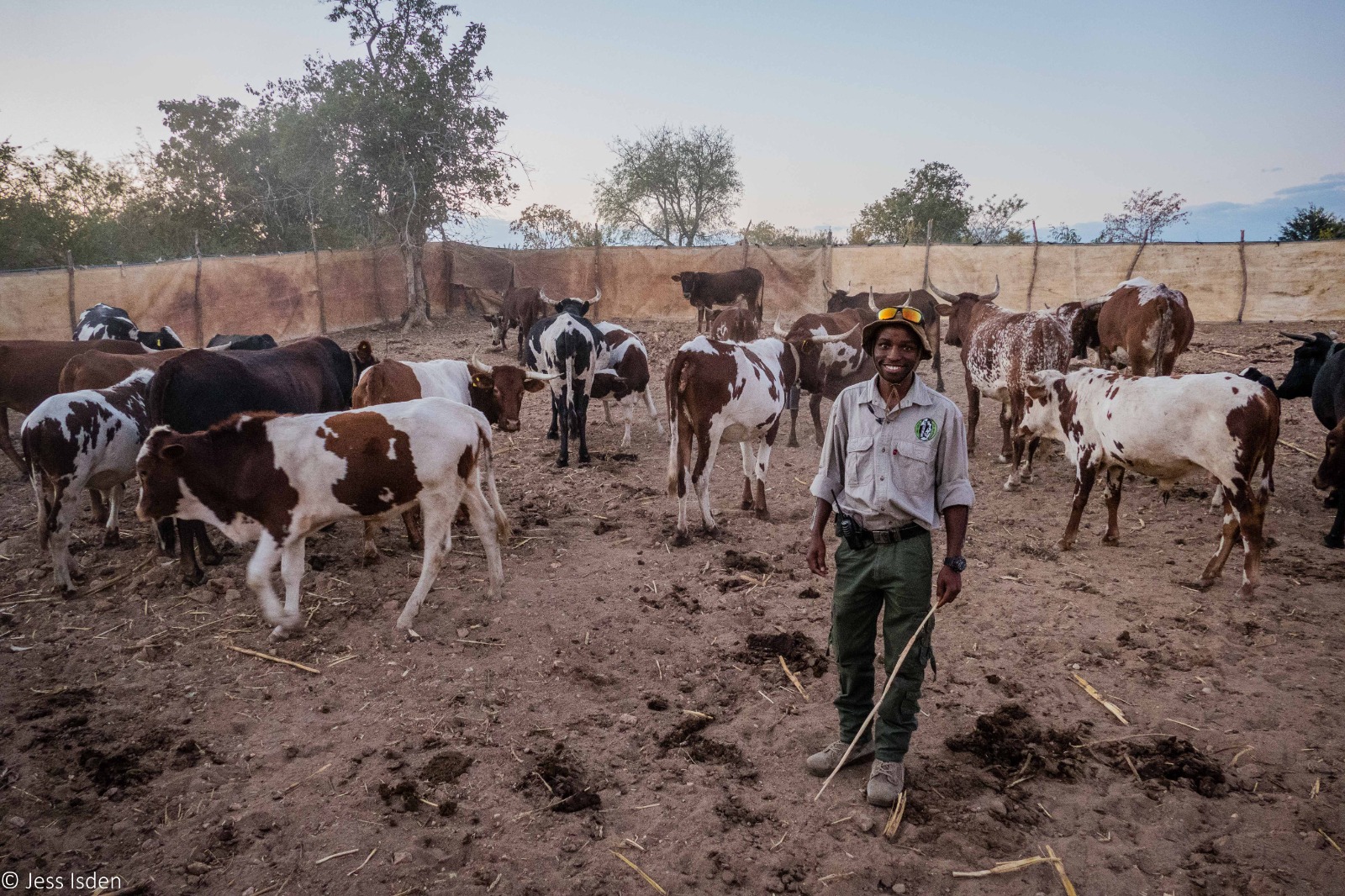
Mathe helped lead the Long Shields Lion Guardian Programme, which combines community participation, early-warning systems and predator-proof livestock enclosures to reduce encounters between people and lions.
The programme uses several non-lethal methods, including vuvuzelas to deter lions from approaching livestock and settlements. It also deploys portable, predator-proof enclosures, known as mobile bomas, to protect livestock at night. Moving the enclosures between farming areas can also help fertilise soils through accumulated animal manure.
The approach addresses a longstanding conservation challenge in Zimbabwe: protecting wildlife while reducing the costs borne by communities living alongside protected areas.
Hwange National Park, Zimbabwe’s largest national park, supports significant wildlife populations, including lions and elephants. However, wildlife moving beyond protected-area boundaries can damage crops, kill livestock and threaten human safety, creating tensions between conservation goals and rural livelihoods.
Mathe grew up in Hwange town but first encountered many wild animals during a primary-school visit to the national park. The experience inspired him to pursue a career in wildlife conservation.
He later interned with the Zimbabwe Parks and Wildlife Management Authority before spending 11 years with the University of Oxford’s Wildlife Conservation Research Unit (WildCRU), progressing from field assistant to lead the Long Shields programme.
He graduated with first-class honours in biological sciences from Midlands State University and received further training in international wildlife conservation practice through a Recanati-Kaplan scholarship at Oxford’s WildCRU.
Mathe estimates that he has trained about 150 wildlife rangers and community guardians in approaches to managing human-wildlife conflict, extending the lessons from Zimbabwe to other conservation landscapes.
The Zimbabwe Parks and Wildlife Management Authority reported that human-wildlife conflict incidents increased from 1,654 in 2024 to 2,090 in 2025, a 26 per cent rise. The authority also recorded 801 livestock losses in 2025, compared with 362 the previous year, underscoring the scale of the challenge facing communities living near wildlife areas.
“Communities living alongside wildlife should not merely be treated as beneficiaries of conservation, but as partners in shaping solutions that work for both people and animals,” Mathe said.
Professor David Macdonald, founder of WildCRU, endorsed Mathe’s nomination, describing him as a deserving recipient of the award.
IFAW Zimbabwe Country Director, Alleta Nyahuye said Mathe’s work demonstrated how conservation could protect wildlife without disregarding the needs of people who share their landscapes.
“His work starts by listening to communities and understanding what it means for a family to lose livestock and then finding practical solutions that protect livelihoods while keeping lions alive,” Nyahuye said.
Mathe is pursuing doctoral research focused on biodiversity monitoring and large-carnivore conservation, working with the Cheetah Conservation Fund. He also aims to contribute to conservation planning across the Kavango-Zambezi Transfrontier Conservation Area, which links protected landscapes across five southern African countries.
His work aligns with wider regional efforts to maintain wildlife corridors and promote coexistence between people and animals across national borders.
New Ziana