
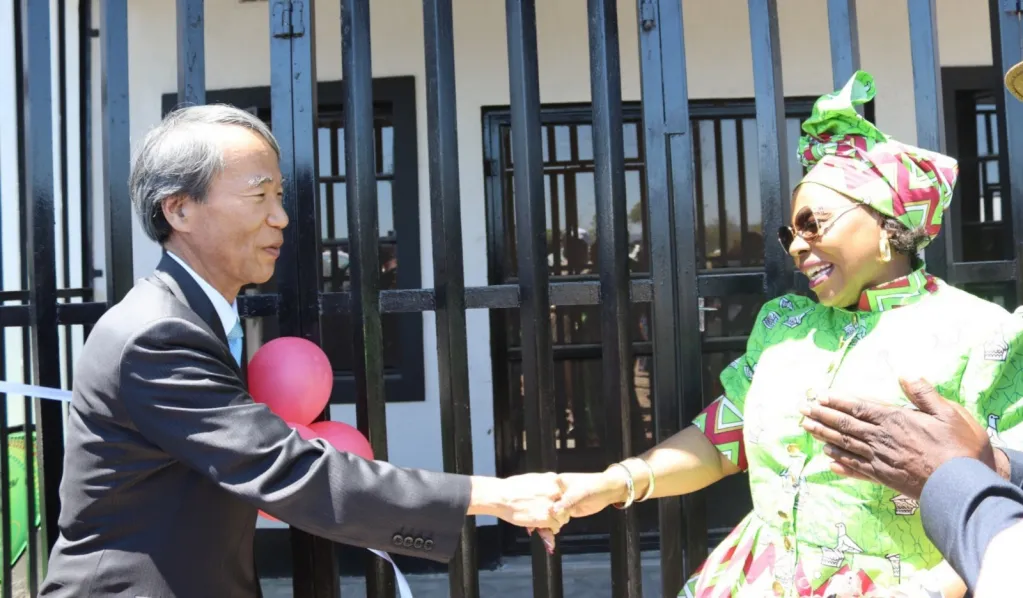
Harare, (New Ziana) – As part of the commemoration of the International Day of Rural Women 2026, the Japanese Embassy officially commissioned a newly constructed shelter, vocational training centre, and ablution block for gender-based-violence (GDV) victims in Zvishavane District, Midlands Province.
In a statement released on Thursday, the Embassy said the facilities will provide essential protection, rehabilitation, and empowerment services for women and girls who have experienced violence.
The Minister of Women Affairs, Community, Small and Medium Enterprises Development, Monica Mutsvangwa, and the Ambassador of Japan to Zimbabwe, Nobutaka Maekawa, attended the ceremony, joining community members and stakeholders to celebrate the project’s successful completion.
The Local Initiatives and Development Agency (LID Agency), a local non-governmental organization, implemented the project with financial support from the Government of Japan through the Grant Assistance for Grassroots Human Security Projects (GGP) program.
Japan provided grant funding of US$71,940 for the construction of the facilities.
Ambassador Maekawa underscored the vital role of rural women in society.
“Women are the backbone of many communities, and they must be empowered at all times with the necessary skills, resources, and opportunities to improve livelihoods, strengthen household food security, and build more resilient communities.”
“I would like to commend the LID Agency for the successful implementation of the project, and we appreciate the completion of the new facilities. I hope that the organization will continue to work closely with the Zvishavane community and that the project will enable more survivors to rebuild their lives and create brighter futures for themselves.”
Despite ongoing efforts by the Government of Zimbabwe and development partners, GBV remains a significant challenge in Zvishavane District, particularly among women and children in vulnerable situations.
According to estimates from district authorities, approximately 14 percent of adult women experienced some form of violence in 2023, equivalent to more than 100 cases reported each month.
The prevalence of GBV in the district highlights the pressing need for safe shelters, psychosocial support services, and skills development opportunities for survivors. The completion of this project is expected to significantly strengthen support systems for GBV survivors and contribute to their long-term recovery and empowerment.
The shelter will accommodate at least 70 survivors annually who require protection from perpetrators and access to essential support services. In addition, the vocational training centre will equip women with practical skills to improve their livelihoods, promote financial independence, and facilitate social reintegration.
LID Agency, which has previously provided agricultural training to more than 10 000 predominantly vulnerable women in the district, is expected to extend its support through the new facility and provide training opportunities to approximately 5 600 vulnerable women.
Over the years, communities across Zimbabwe have benefited from support provided by the Government of Japan under the GGP program. The scheme supports grassroots initiatives that are aimed at improving social and economic conditions in areas such as education, health, food and nutrition security, water, sanitation and hygiene (WASH), and assistance for vulnerable populations.
Since its introduction in Zimbabwe in 1989, the program has funded 167 projects nationwide, with total assistance exceeding US$16 million.
New Ziana