
By Sharon Tawuya
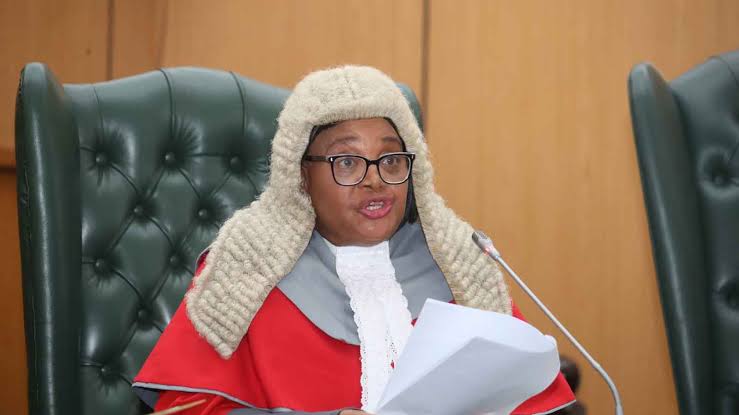
Harare, (New Ziana)- Chief Justice Elizabeth Gwaunza on Thursday officially commissioned Zimbabwe’s first mobile court in Harare at the Judicial Training Institute of Zimbabwe, saying it is another practical step towards bringing justice closer to the people.
“It is a privilege to officiate at the commissioning of the Judicial Service Commission’s first mobile court as we take another practical step towards bringing judicial services closer to the people of Zimbabwe,” she said.
She said for many people, access to court still involves travelling considerable distances, paying transport costs and taking time away from work, family responsibilities or the pursuit of a livelihood.
“These burdens can be particularly difficult for people with limited means, older persons and persons with disabilities,” Chief Justice Gwaunza said.
She said addressing the barriers was not merely a matter of convenience, but a constitutional obligation.
“A court that people cannot reach cannot fully serve them. The mobile court takes the court to the people, rather than requiring the people to come to the court,” she said.
Chief Justice Gwaunza said the mobile court has all the requirements of a conventional court. It is fitted with internet connectivity, ablution facilities and is solar powered, ensuring it can operate effectively in any community.
All proceedings will be recorded to form part of the court record.
She said the initiative advances the JSC’s Strategic Plan for 2026-2030 and gives concrete expression to the theme of this Legal Year, which calls for a quality, inclusive and sustainable judicial service.
“At its heart, the mobile court is an efficiency measure. For court users, it shortens journeys, reduces transport costs and limits time lost from work. Witnesses who live near the court are more likely to attend, meaning fewer missed appearances and fewer postponements.
“For the justice system, it allows matters to be heard close to where they arise. Police officers will spend less time conveying dockets and accused persons to Mbare, while Mbare Magistrates’ Court can attend more promptly to matters that remain before it,” she said.
For the JSC, it shows better use of public funds, said Chief Justice Gwaunza.
“An equipped truck, supported by a dedicated team, can be deployed according to identified need and redeployed as that need changes, extending reach without the cost and time required to build a permanent court in every locality.
“The mobile court will initially operate in the Harare South area. It will cater for matters originating from Glen Norah, Glen View, Budiriro and Southlea Park with the objective of reducing the caseload and pressure on the Mbare Magistrates’ Court,” she said.
The court will operate on a rotational basis, visiting the police stations in Glen Norah, Budiriro, Glen View and Southlea Park.
Each station will be visited once a week, bringing judicial services closer and reducing the need for litigants to travel to Mbare.
She said the implementation plan envisages each province having its own mobile court by 2030.
“Lessons from this pilot will inform the selection of subsequent locations as the programme is progressively rolled out across the country,” she said.
Zimbabwe is joining a growing number of countries using mobile courts to close the justice gap.
Uganda formally launched a nationwide mobile courts programme in March 2026, allowing judges and magistrates to hear civil and criminal matters outside traditional courtrooms, including in remote districts and refugee settlements, with the same legal validity as conventional courts.
Chief Justice Gwaunza warned that efficiency must never compromise justice.
“A court that moves quickly but unfairly does not serve justice. Wherever the mobile court sits, judicial independence, impartiality and procedural fairness must guide its work.”
New Ziana