
By Cynthia Pelagia Guma
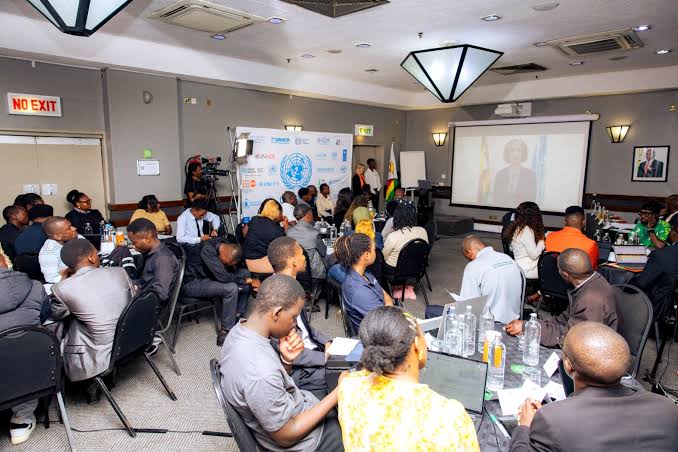
Harare (New Ziana) -Young innovators from across Zimbabwe on Thursday showcased solutions to some of the pressing development challenges facing the country during the Zimbabwe Youth Innovation HackLab 2026 Pitch Competition, held as part of the National Youth Symposium.
Nine finalist teams, drawn from three strategic categories following a nationwide call for applications particpated in the competition, that attracted thousands of submissions.
The initiative sought to transform youth-generated ideas into practical, sustainable and potentially fundable enterprises, while strengthening the participation of young people in addressing national development priorities, with the three categories focusing on holistic youth health and well-being, youth economic empowerment and structural formalisation, as well as scaling green jobs and climate resilience.
The HackLab was anchored in the Zimbabwe National Youth Empowerment Strategy 2026–2030, approved by Cabinet in August 2025, and the United Nations 2030 Agenda for Sustainable Development.
Young people themselves identified the challenges that were addressed by the young innovators, working alongside government representatives, United Nations agencies and civil society organisations during a HackLab Problem Definition Workshop held in July 2026.
Organisers said the initiative went beyond conventional business competitions by providing a structured pathway through which young people could develop their ideas into sustainable enterprises.
“The HackLab is not a traditional business competition. It is a structured, transformative pathway from initial concept to sustainable, funded enterprise,” one of the organisers said in opening remarks.
Under the health and well-being category, finalists presented ideas aimed at improving equitable access to quality, youth-responsive health services, particularly in addressing adolescent pregnancies, sexually transmitted infections, mental health challenges and substance abuse.
The economic empowerment category focused on tackling youth unemployment, skills mismatches, barriers to formal employment and limited access to start-up capital.
Proposed innovation areas included digital marketplaces, micro-enterprise incubators, artificial intelligence-powered skills assessment and apprenticeship platforms designed to connect young people with sustainable economic opportunities.
The third category focused on climate resilience and the green economy, with innovators exploring solutions around climate-smart agriculture, renewable solar energy and community resilience,with projects seekingg to address information gaps, skills shortages and financial barriers that have limited young people’s participation in the growing green economy.
The nine finalist teams were assessed against six criteria namely problem-solution fit, innovation and originality, feasibility and viability, youth ownership and leadership, scalability and impact potential, as well as intersectionality and inclusion.
Each of the three category winners was set to receive a US$5 000 seed grant, disbursed in milestone-based tranches to support the piloting of their innovations over the subsequent 12 months.
The organisers challenged the finalists to view the competition as the beginning of a longer journey towards developing solutions that could deliver meaningful change in their communities.
New Ziana